While Jean Prouvé’s creations now command extraordinary prices on the design market, their creator was driven by a far simpler and more radical ambition: to develop forms that were useful, affordable and suited to the needs of their time. Trained as a metalworker, he developed an early fascination with mechanics and aviation, which he channelled into architecture and furniture designed to be functional, economical and easy to manufacture. In his Nancy workshop, established in the early 1920s, he began experimenting with innovative production techniques using folded sheet steel. Alongside Charlotte Perriand, Le Corbusier, Pierre Jeanneret and Robert Mallet-Stevens, he became a founding member of the Union des Artistes Modernes, a movement that championed a stripped-back aesthetic aligned with the industrial age. This vision would find its fullest expression in his celebrated demountable houses, conceived as fast, adaptable and accessible solutions to modern construction
Today, Jean Prouvé’s work holds a major place in the history of modern design and architecture. This recognition owes much to the dedication of collectors, publishers, foundations and enthusiasts committed to preserving and promoting his legacy. Among them is his youngest daughter, Catherine Prouvé, who has spent nearly four decades safeguarding and championing her father’s work. Since 2002, the furniture manufacturer Vitra has also played a key role in bringing his designs to a wider audience and now holds one of the most significant collections of furniture created by Jean Prouvé. Gallery owners have likewise been instrumental in this transmission. Patrick Seguin has helped raise awareness of both Prouvé’s furniture and his demountable buildings, while Philippe Jousse has been actively involved in rediscovering and promoting his work since the 1970s. Thanks to the efforts of these various figures, several of Jean Prouvé’s houses have been given a new lease of life and are now open to the public.
A Maison Prouvé 58 in Saint-Paul de Vence
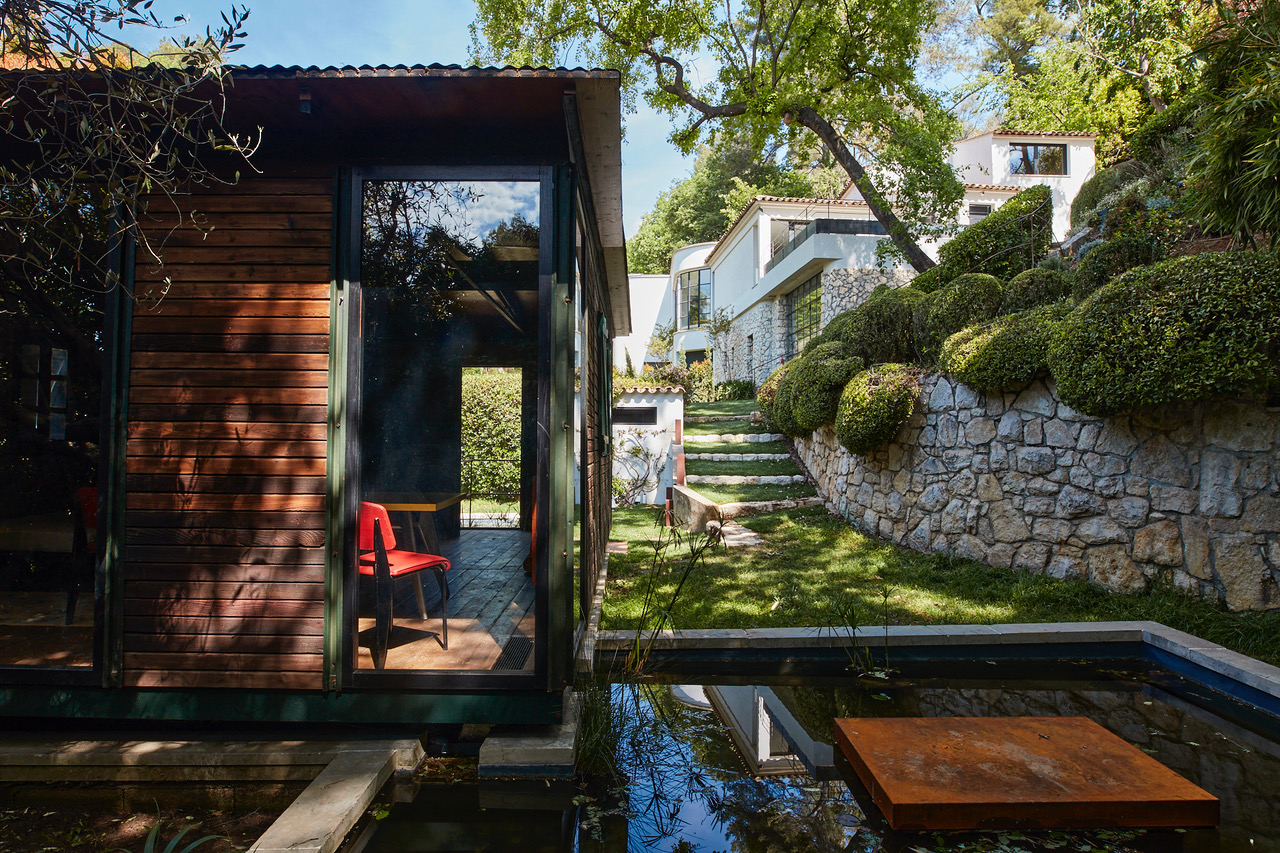
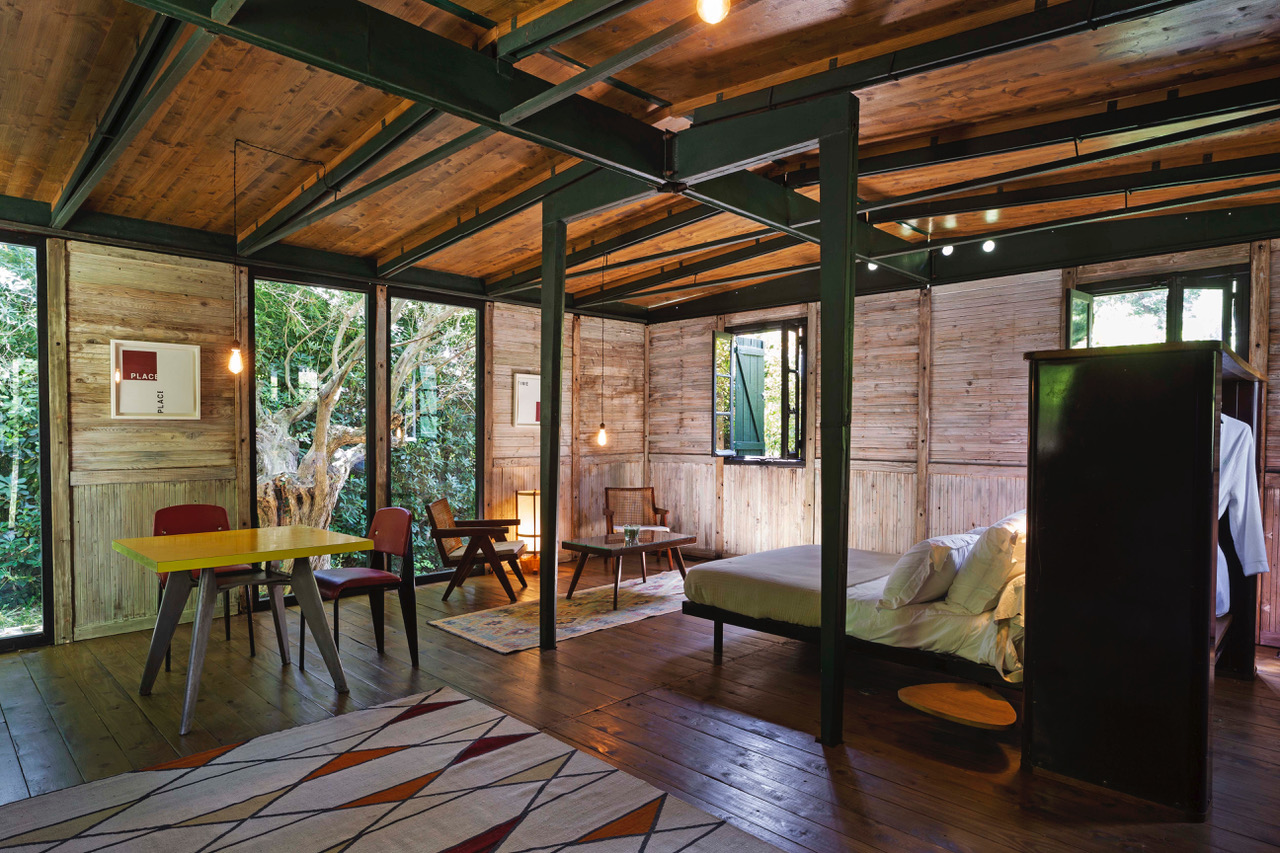
In Saint-Paul de Vence, the Fondation CAB offers visitors a unique opportunity to explore Jean Prouvé’s world through two of his demountable houses. The first, a 6 × 6 house designed in 1946, is installed in the Foundation’s gardens and can be visited when it is not being rented for overnight stays. It belongs to a series of prefabricated houses developed to provide rapid houssine solutions in areas devastated by the Second World War. The second, the Maison Prouvé 58, is located on a separate property just a few minutes away and will open to visitors this summer. Covering approximately 125 square metres, it reinterprets the concept of the single-family home through flexible, rational spaces designed for everyday living. Through the restoration and presentation of these buildings, the Fondation CAB pursues both a cultural and heritage mission: preserving these historic structures while giving them renewed purpose through the installation of design furniture and artworks from its collection.
Until 31 October, the exhibition Jean Prouvé – Inventor of Houses extends this exploration by revisiting the designer’s ambition to industrialise the act of building. Archival photographs from the 1930s to the 1970s, rarely seen prefabricated elements—including panels, sunshades and doors—and iconic furniture pieces such as the Cité bed, the Compas table and the Standard chair all illustrate Prouvé’s approach, in which form emerges directly from structure and function.
→ Fondation CAB, 5766 chemin des Trious, 06570 Saint-Paul-de-Vence
A Cameroonian Bungalow in the Calanques of Marseille
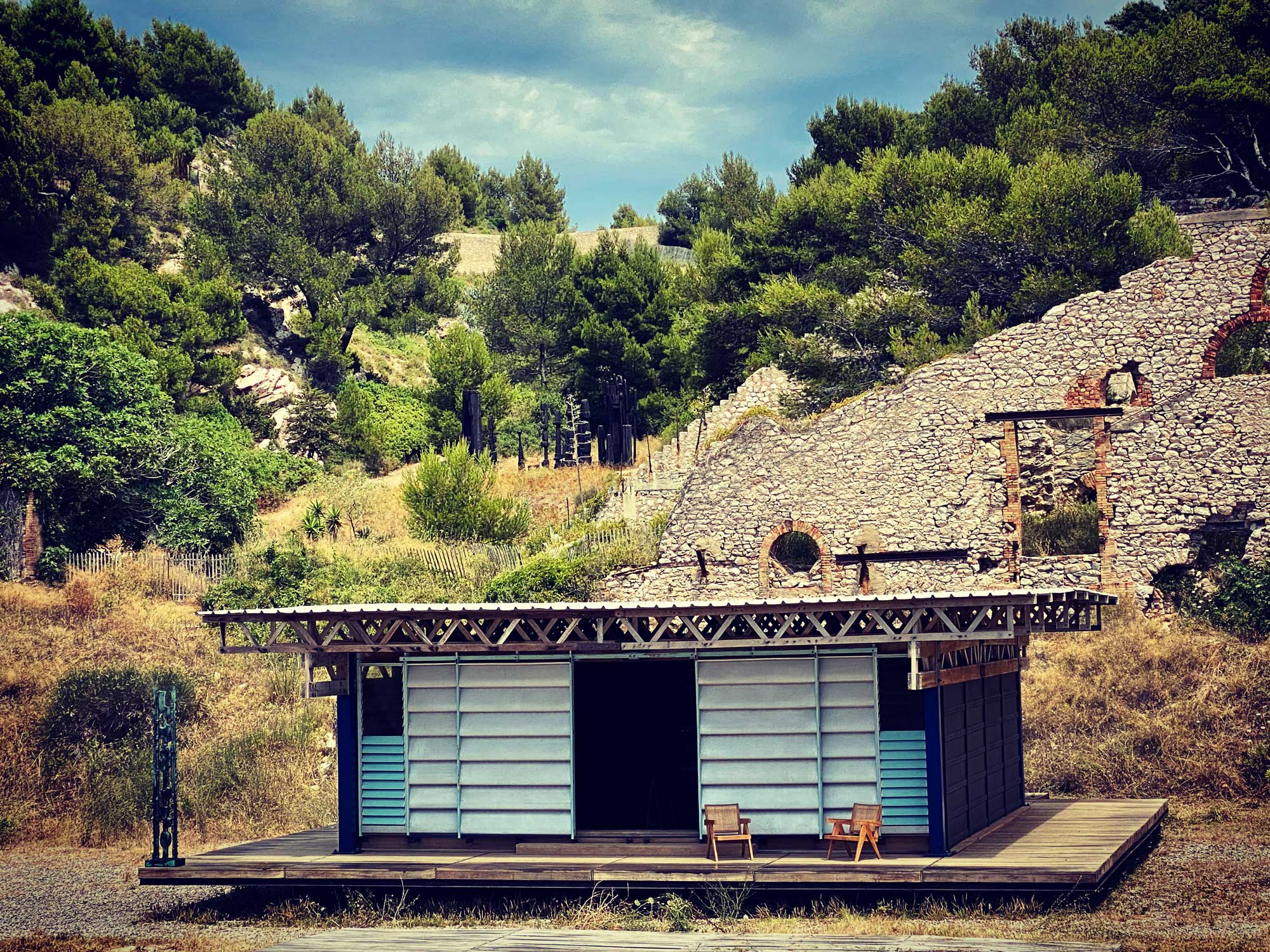
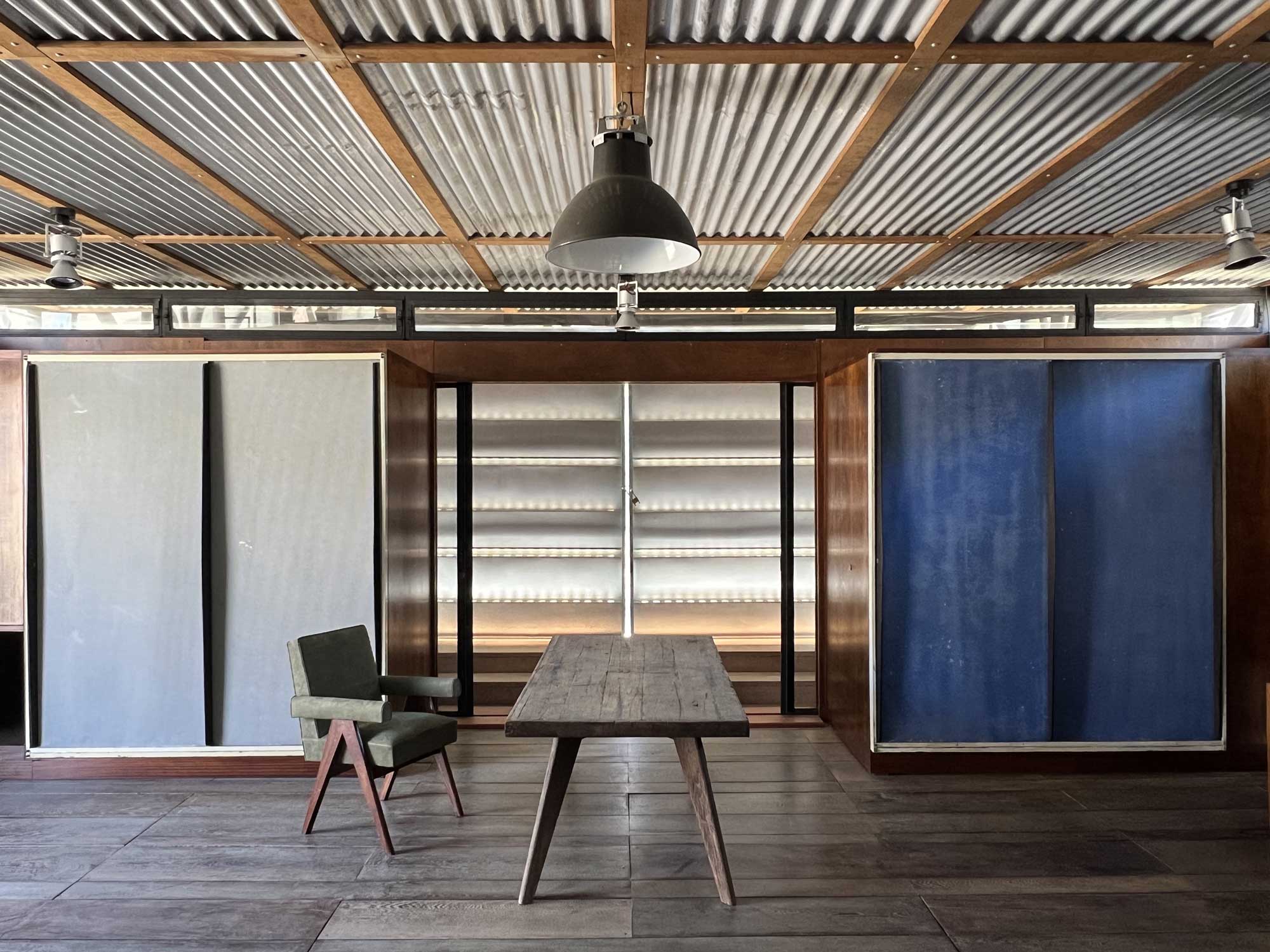
In Marseille, the Friche de l’Escalette, led by art dealer and collector Éric Touchaleaume, offers another opportunity to discover Jean Prouvé’s work. Dedicated to the preservation of lightweight architecture, furniture and twentieth-century sculpture, the site is home to a Cameroon Bungalow designed in 1964 by Jean Prouvé in collaboration with the architectural practice LWD. Developed from research conducted on the Tropical Housing for Humid Climates prototype created in 1958, the building reflects Prouvé’s ability to adapt his construction principles to local conditions. The metal frame originally envisaged was replaced with a structure made from locally sourced timber, while the corrugated aluminium façades promote natural ventilation, making the building particularly well suited to tropical climates. Originally conceived as part of a programme of classrooms and teachers’ housing in Cameroon, the project illustrates Jean Prouvé’s ambition to develop an industrial architecture capable of responding to a wide range of contexts without sacrificing simplicity of construction.
→ La Friche de l’Escalette, Route des Goudes, Impasse de l’Escalette, 13008 Marseille
A Maison Métropole in Le Muy
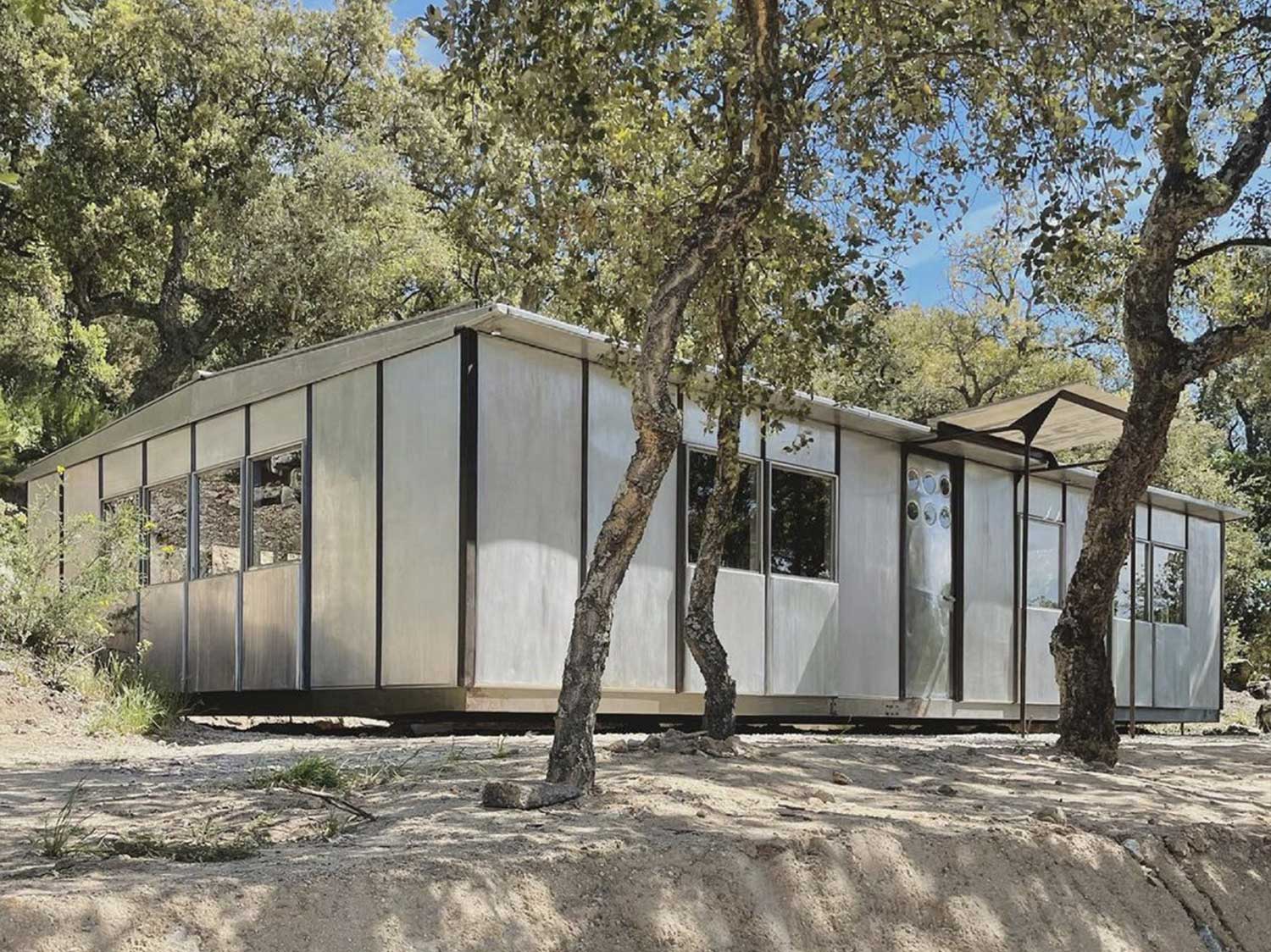
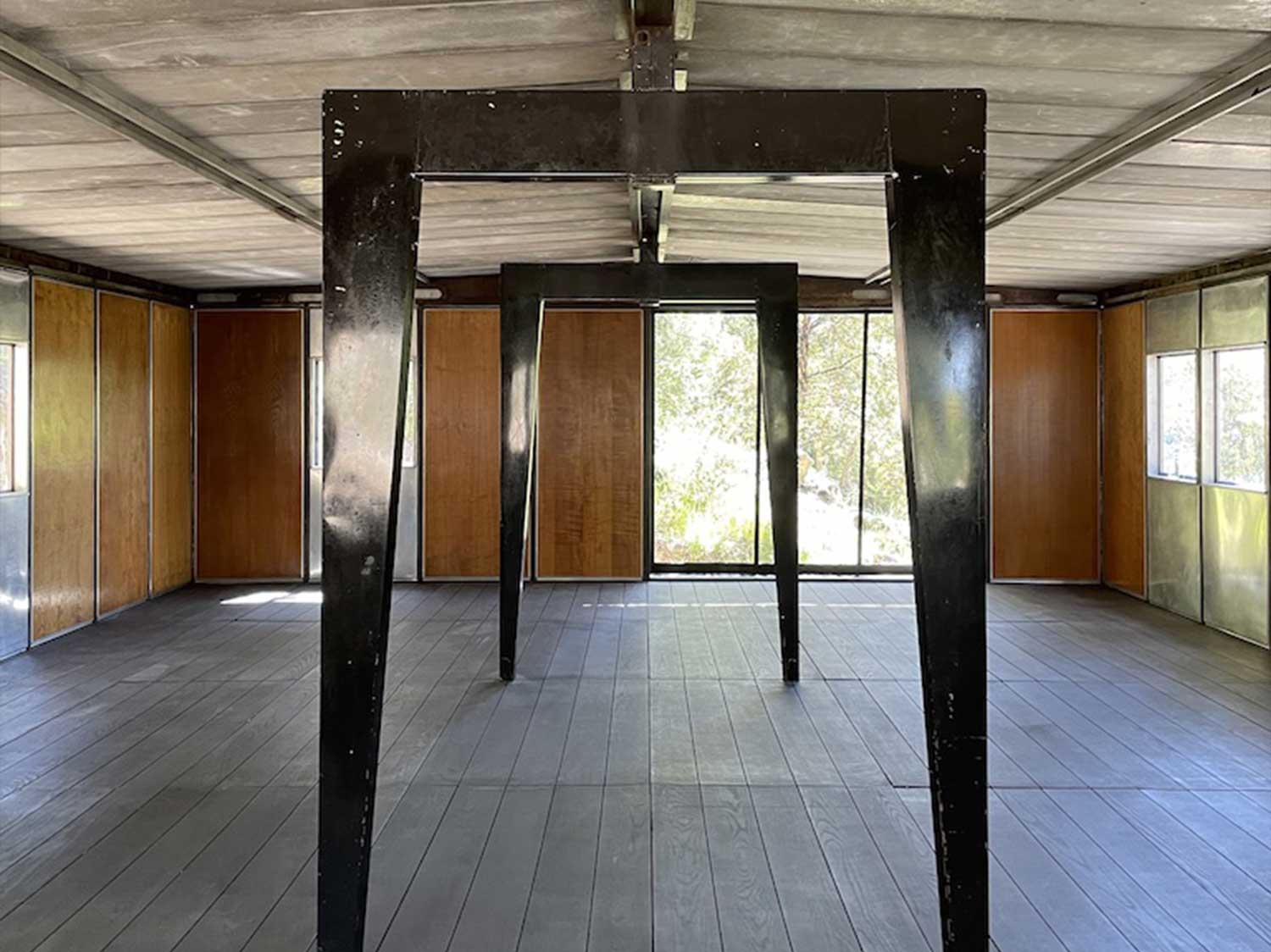
In Le Muy, Villa Navarra, designed by Rudy Ricciotti for art dealer Enrico Navarra, houses a remarkable collection of Jean Prouvé’s architectural works within its grounds. The site includes two 6 × 6 houses dating from 1944, as well as a Maison Métropole from 1949, conceived in response to the post-war housing shortage. Prefabricated using industrialised façade panels incorporating windows and vertically sliding shutters concealed within a ribbed aluminium casing, the Maison Métropole is also distinguished by its glazed winter garden and roof made of adjoining aluminium trays. True to Prouvé’s approach, the design places particular emphasis on the comfort of its occupants, both through its thermal performance and the extensive use of wood throughout the interior spaces. Even more unusual, the property is home to several other emblematic works by the engineer-builder, including a Total petrol station from 1969 and the canopy designed for the Social Security building in Le Mans (1953–1954), illustrating the breadth of his architectural research. Rarely assembled in a single location, these structures offer a striking overview of Jean Prouvé’s constructive vision, balancing industrial innovation with a deep concern for everyday comfort and quality of life.
→ Villa Navarra, 83490 Le Muy