While awaiting the opening of the first temporary exhibition at his FAMM museum on October 18, 2025, curated by Simon de Pury, collector, philanthropist, and former hedge fund manager Christian Levett — founder of FAMM — announces the launch of a new educational platform: The Levett Letter & Levett Lounge. This initiative combines factual insights, expertise, and a collector’s perspective to serve a community of collectors and cultural leaders.
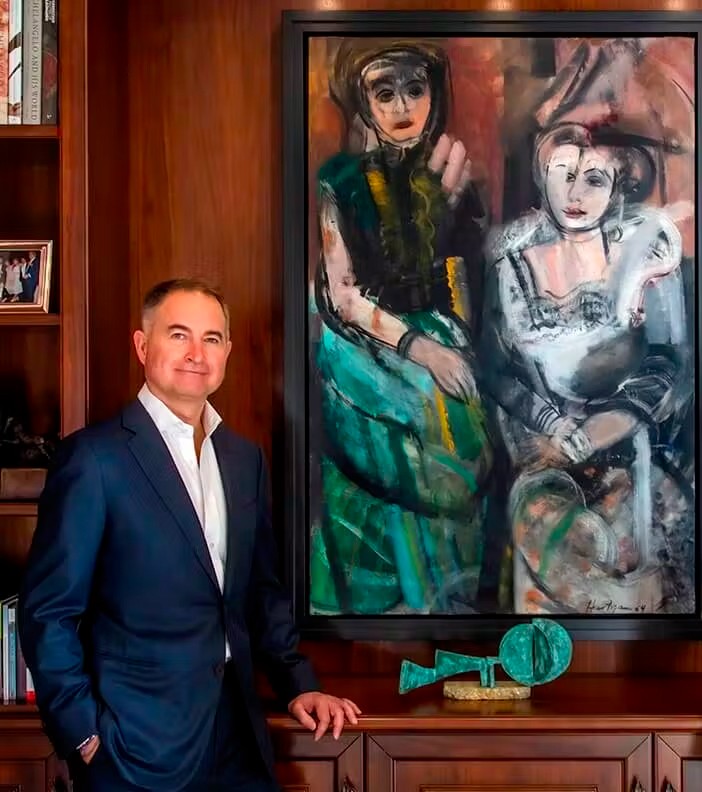
Plein Sud : What kind of collector are you? Compulsive? Passionate? How would you describe your relationship to art and the need to build a collection?
Christian Levett : I would describe myself as passionate, and at times almost maniacal about collecting. It’s something that has been part of my life since I was a child collecting medals, coins, and football cards. Over time, that instinct evolved into a much deeper commitment to art. For me, collecting is about more than ownership—it’s about learning, preserving, sharing, and hopefully making a contribution to how certain artists are understood and valued. That’s why I’ve always made a point of lending works to exhibitions and eventually opening my own museums.
P.S. : How many works do you own?
C.L. : At this point, I have about 1,500 works in my collection, including around 600 by female artists. The rest comprises pieces from earlier collecting periods, including some antiquities and modern works. Over the past few years, I’ve sold a large part of my antiquities collection to focus more fully on art by women.
P.S. : Do you remember the first artwork you acquired?
C.L. : Yes I was around 25/26 years old and living and working for an American investment company in Paris. I'd been regularly going to the Louvre at weekends and fell in love with the early 17th century Dutch and Flemish galleries. I then bought a painting from that period of a fire scene in Delft in around 1630, by an artist called Egbert Van Der Poel.
P.S. : Why did you close the Mougins Museum of Classical Art (MACM), which you had founded, to replace it with FAMM? Where is your collection of antiquities now exhibited?
C.L. : I realised I had a unique opportunity to build a collection of global significance in this area and to create something that did not exist in Europe. I therefore chose to transform the museum entirely into FAMM. Regarding my antiquities collection, most of the works were sold through a series of auctions at Christie’s in London and New York between 2023 and 2024. I have retained a smaller number of pieces in my personal collection, and a further Mougins Museum sale is planned at Artcurial in Paris in November. My focus is now fully dedicated to promoting and researching art by women.
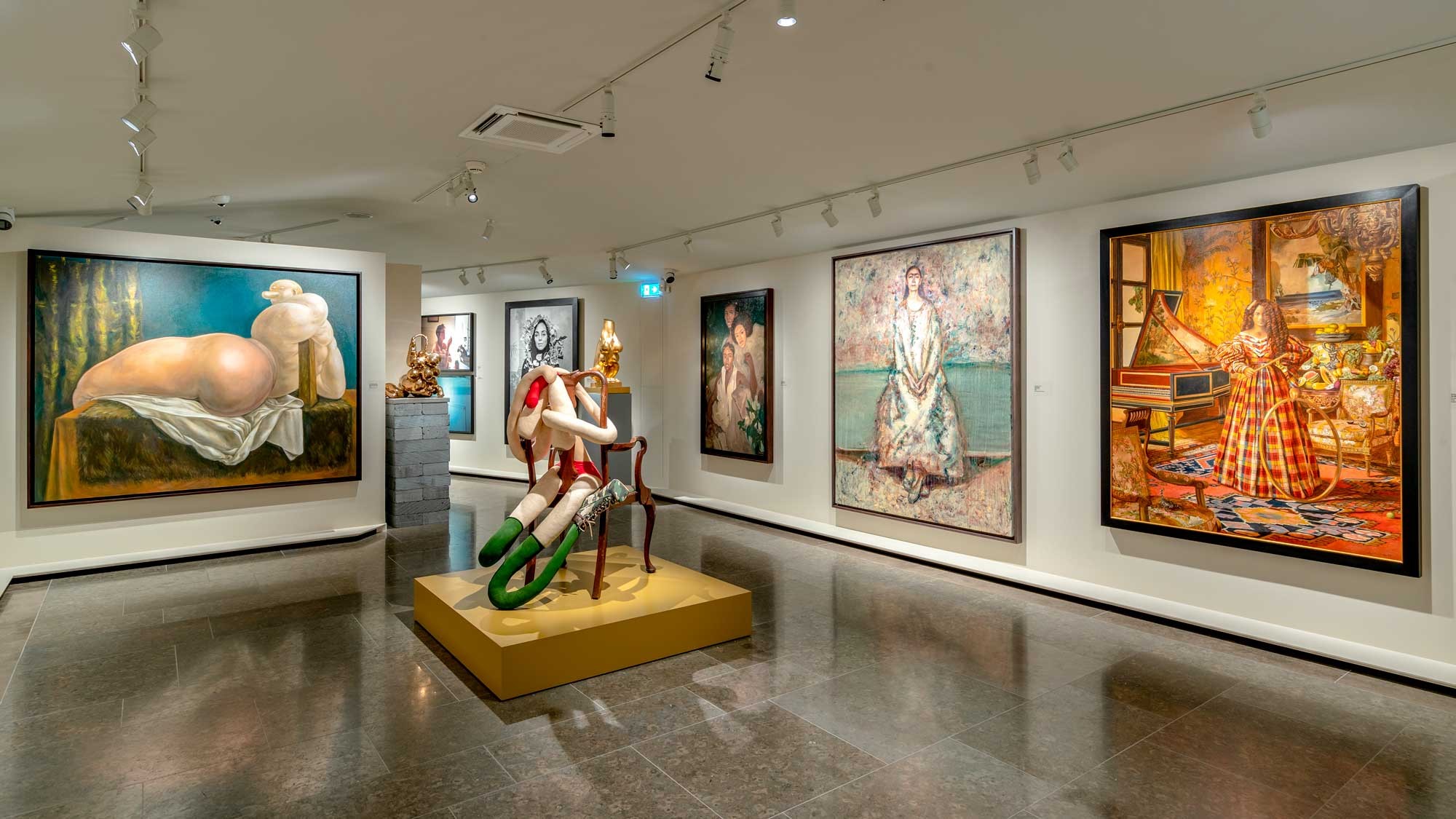
P.S. : Was it necessary to create a museum specifically dedicated to female artists?
C.L. : Yes, I felt it was absolutely necessary. Over the years, as I collected and studied art, I became increasingly aware of how female artists have been consistently underrepresented and undervalued—not only in museum collections but also in scholarship and the market. For example, if you look at books like The Triumph of American Painting by Irving Sandler you find hundreds of reproductions and not a single work by a woman. That absence struck me as a glaring omission.
I wanted to create an institution that could help correct this imbalance. FAMM is the first museum in the world outside of the USA with a permanent collection dedicated exclusively to women artists, and my hope is that it gives them the visibility and respect they have long deserved.
P.S. : As artists, are women still, even today, less valued than men?
C.L. : Yes, unfortunately, even today there is still a clear disparity. When I started focusing my collection on women artists, I noticed that the very best works by women were often available at a fraction of the price of comparable works by men. It wasn’t because the quality was lacking—on the contrary, many of these paintings are extraordinary—but because historically, female artists simply weren’t given the same opportunities or exposure.
One of my goals with FAMM is to challenge that situation by showing that these works stand on equal footing with, and often surpass, those by their male contemporaries.
P.S. : Is there such a thing as “female art”?
C.L. : I don’t think there is a single definition of “female art.” What unites the artists in the collection is not a shared aesthetic but the historical context in which they worked. Many of them faced exclusion from major galleries and institutions, and a lack of critical recognition.
That said, certain themes and perspectives do recur—whether it’s the way some artists have approached the body, personal biography, or abstraction—but ultimately, each artist’s voice is unique. For me, the most important thing is to look at these works as art of the highest quality, rather than reducing them to a label based purely on gender.
P.S. : Which artist moves you the most, and why?
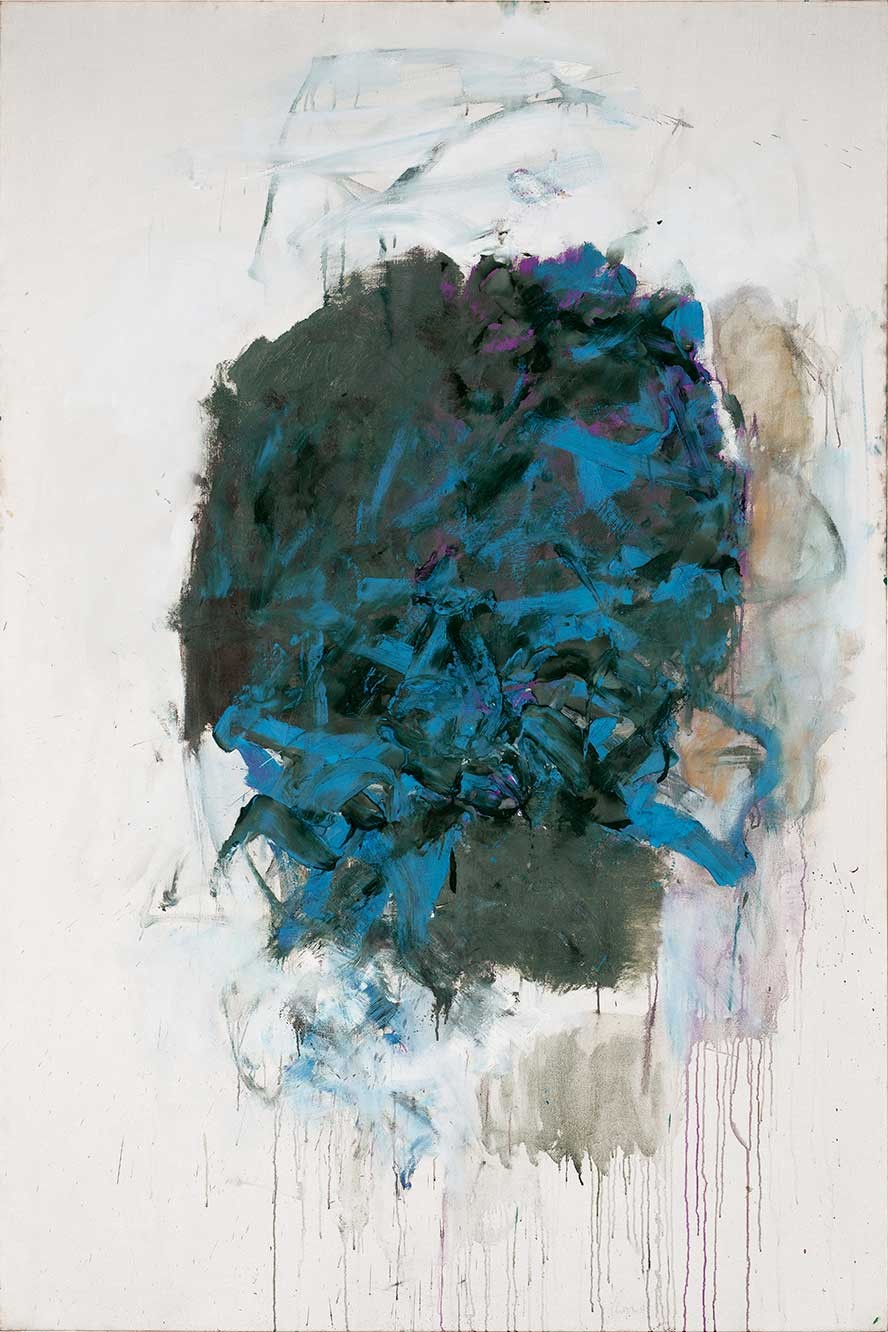
C.L. : It’s impossible to name only one, but I’ve always been deeply moved by Joan Mitchell. Her work combines an extraordinary power and lyricism, and I feel a special connection to her paintings made in the South of France. There is something about her way of translating emotion into abstraction that I find endlessly compelling. Among historical artists, Berthe Morisot also stands out—she was pioneering at a time when women had almost no visibility.
P.S. : If your collection were a piece of music, what would it be?
C.L. : Well it may seem like a strange choice, but I grew up with house music in the UK in the late 1989's and 1990's. Both the research and building of this collection has been invigorating and inspiring, so I'm going to pick a dance track rather than something traditional, and say Pjanoo by Eric Prydz.
P.S. : If you had to draw your collection, what would it look like?
C.L. : Beyond the fact that they are all women, what connects them is excellence and resilience. They span different eras and styles—from Impressionism to Surrealism, Abstract Expressionism, and Contemporary painting. Some, like Berthe Morisot and Joan Mitchell, were pioneers in their fields, while others were overlooked for decades despite producing exceptional work.
What I find compelling is that each artist in the collection contributed something significant to the evolution of modern and contemporary art. The museum’s structure, organized chronologically across four floors, really highlights that diversity and shows that there is no single narrative of “women’s art”—only multiple stories of innovation.
P.S. : Do you have a special relationship with any one work in your collection? If so, could you share an anecdote?
C.L. : One that stands out is Lee Krasner’s Prophecy, which I acquired privately a few years ago. It’s a monumental painting that she worked on just before Jackson Pollock’s death, and it has an almost volcanic intensity. When it arrived, I remember uncrating it and being overwhelmed by the scale and the power of it. I sat in the gallery alone for hours just looking at it. That’s a moment I’ll never forget.
P.S. : What was your most recent acquisition?
C.L. : A 1942 oil painting by Leonor Fini, the female surrealist. It's a self-portrait as a Sphinx, with her boyfriend at the time, Stanislao Lepri, who was Alaskan a surrealist painter.
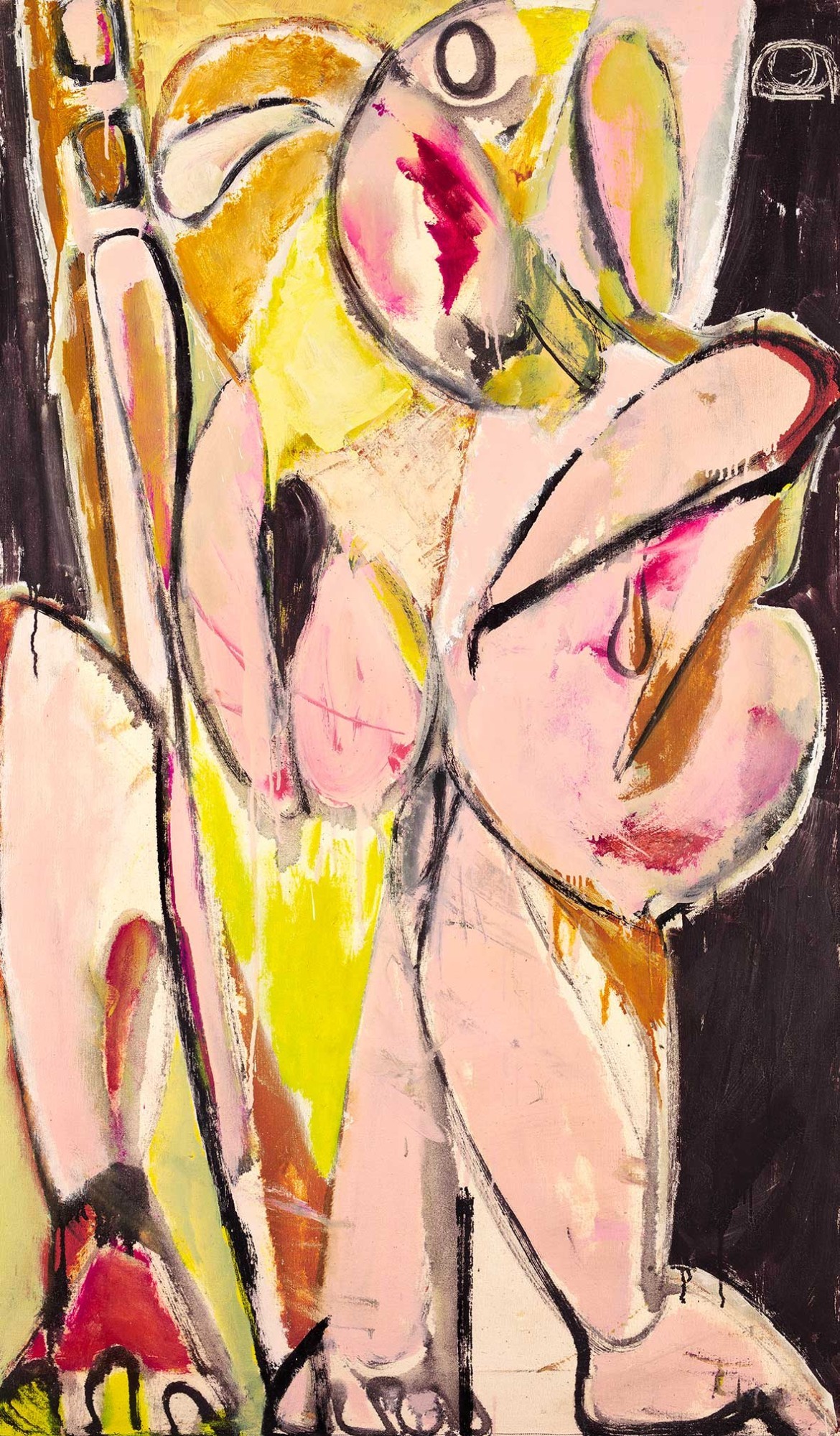
FAMM: The Collection, on view all year round at FAMM (Women Artists Museum of Mougins).
→ Explore our art itinerary across the French Riviera and the Nice hinterland