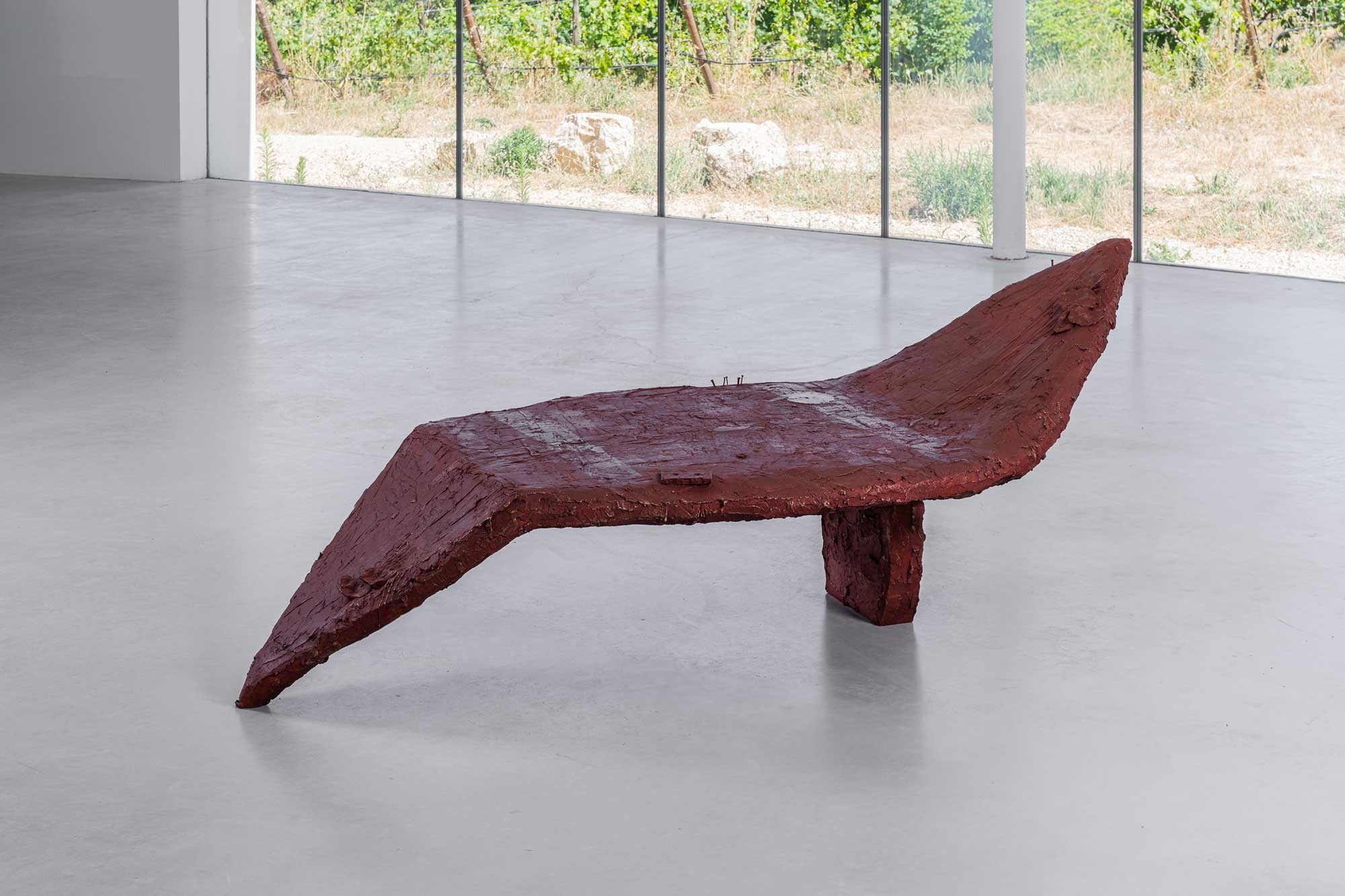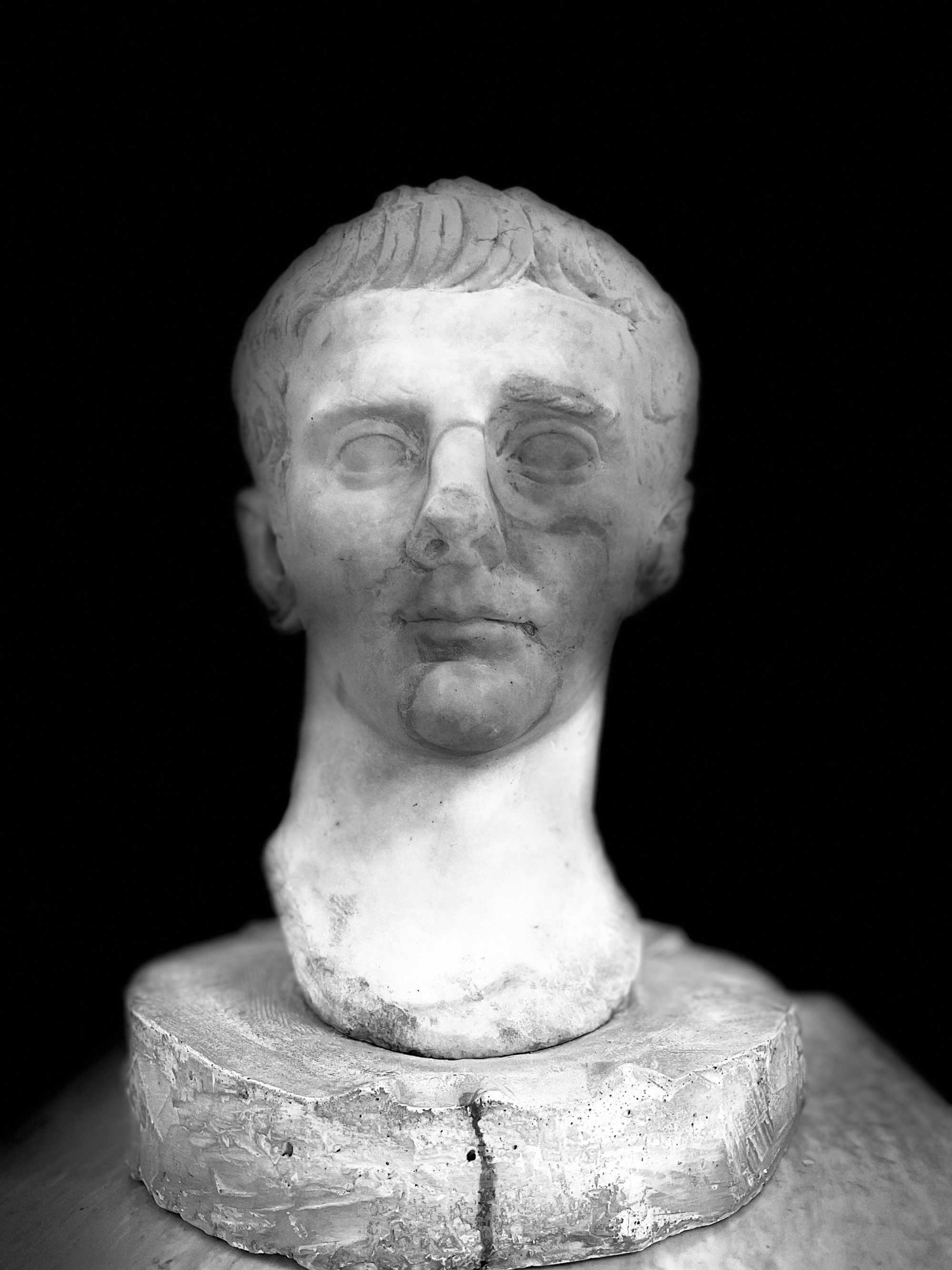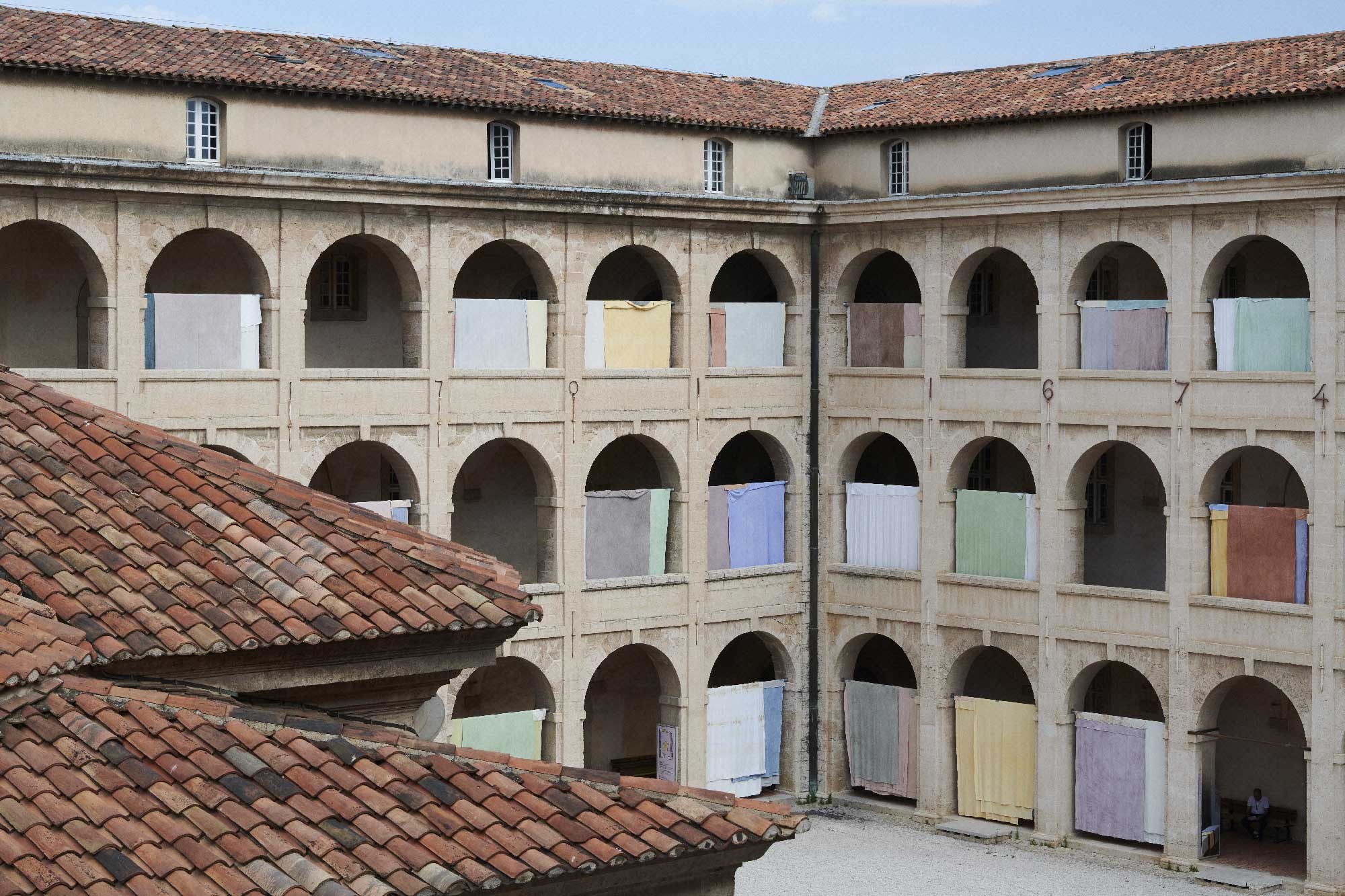
1/10 Mucem - Marseille
Méditerranées →
Venue: Mucem, J4 (Niveau 2)
The exhibition looks at the way in which the Mediterranean has been constructed as an element of natural, artistic and ethnological heritage – three approaches comparable in construction over time. It shows how museums have presented the Mediterranean theme. The exhibition will present the Mucem and its identity from a historical and disciplinary perspective, demonstrating both its origins and its uniqueness in the museum landscape.
2/10 Fondation Vasarely - Aix-en-Provence
A life in colours, Claire Vasarely →
The Fondation Vasarely is devoting an unprecedented retrospective to Claire Vasarely (1909-1990), an artist who has remained in the shadows for too long. The exhibition reveals the wealth of her work through paintings, posters, textiles and previously unseen archives, testifying to her role in the 20th century avant-garde.
Produced in partnership with the Vasarely Museum in Pécs (Hungary).
3/10 3 bis f - Centre d’arts contemporains d’intérêt national - Aix-en-Provence
Yuyan Wang, Weather →
Exhibition supported by the Carte Blanche program, Région Sud
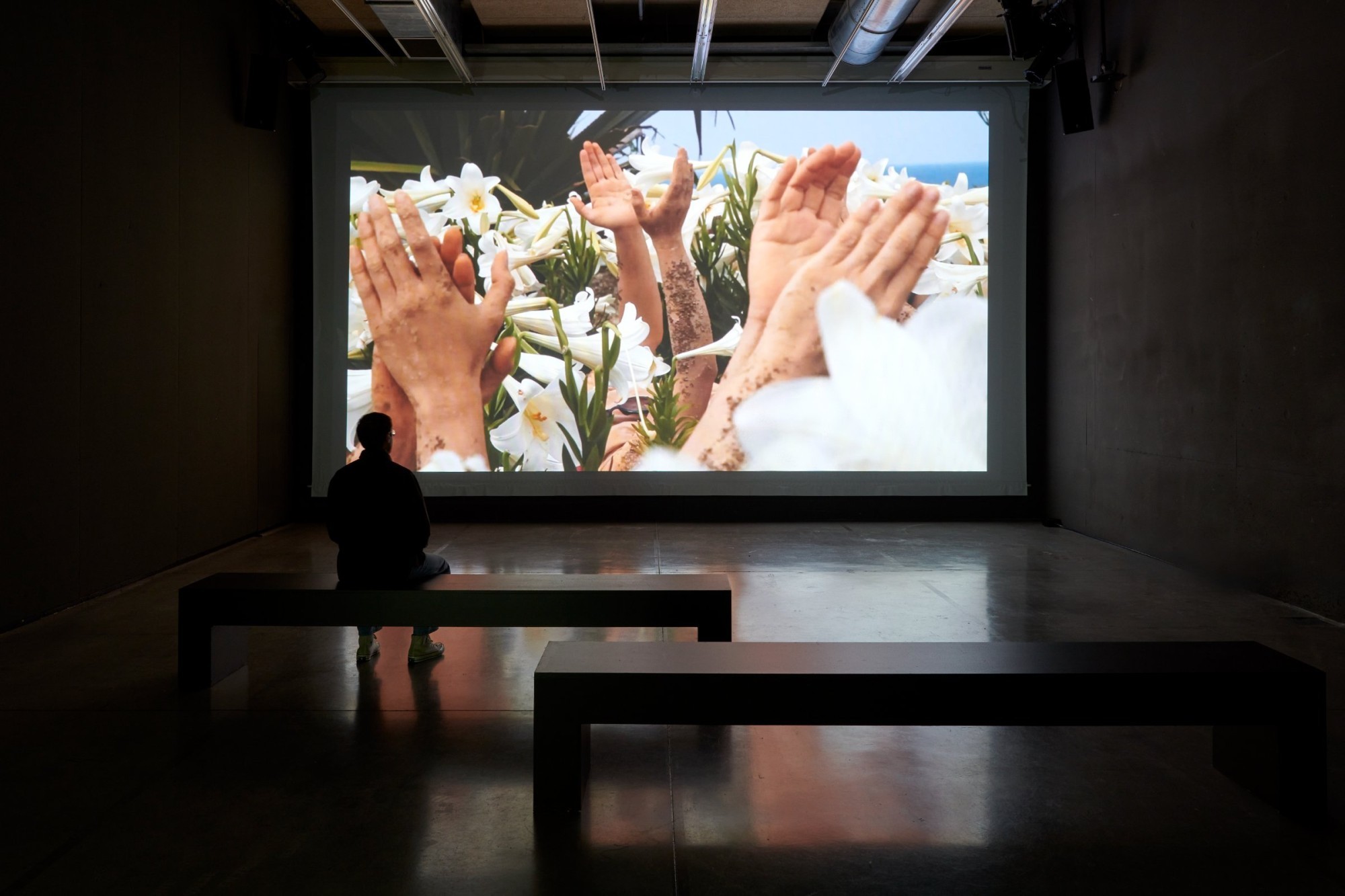
Yuyan Wang is a video artist born in China and based in France. Her work explores the transformation of materials drawn from the image industry, which she deconstructs and reassembles through editing. By diverting images from their original contexts and from the ways they circulate—whether found, altered, or fabricated—she converts them into immersive sensory experiences.
Weather sketches an atmospheric landscape from images gleaned on social media. Captured by anonymous individuals across a scattered cartography, these wandering images—meteorological phenomena, everyday gestures, fleeting moments of contemplation—form the drifting fragments of a shared visual horizon. Stripped of their provenance and of the codified uses of dominant narratives, they gradually reveal affective layers tied to sensibility. In an age of information overload and the general acceleration of time, this fractured panorama invites us to relearn how to inhabit the real.
4/10 Triangle-Astérides - Marseille
A Lion Armed With A Caduceus →
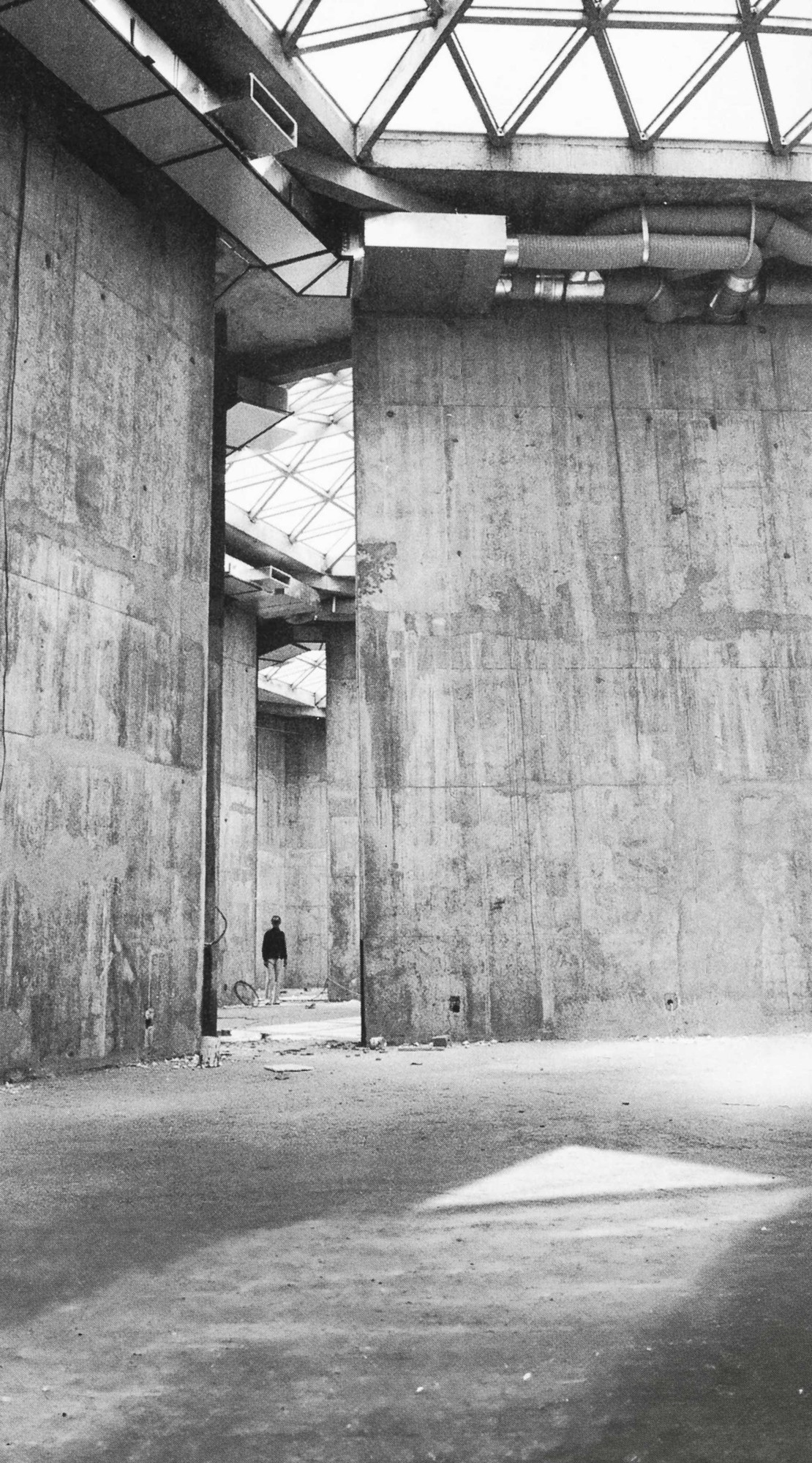
Venue: Galerie La Salle des Machines, Friche la Belle de Mai
An exhibition conceived and produced by Triangle-Astérides
With the support of the Aix-Marseille-Provence Metropolis and the DRAC Provence-Alpes-Côte d’Azur
In collaboration with the Agency for Education through Sport (APELS)
A Walk in Marseille [Balade à Marseille] is a collective film, and the exhibition A Lion Armed with a Caduceus — a title inspired by the city’s coat of arms — presents its conception process. Directed in 2025 by Léandre Humbert, A Walk in Marseille was written at the end of 2024 by Djayssen Ouchene in collaboration with Louka Ananti, Nadir Boudjillouli, Yacine Djerbara, Adam Doudane, and Mathias Nkaoua — then part of the participating audience of the national contemporary art center Triangle-Astérides, alongside Alicia Salicetti and Djena Siby.
After a period of immersion within Triangle-Astérides, the 2024 participating audience pointed out the absence of manga in the center’s usual programming. Yet, whether on paper or on screen, this cultural form was a shared reference for the entire group. It is also a field widely explored by many contemporary artists — including Omar Castillo Alfaro, Neïla Czermak Ichti (Associate Artist at Triangle-Astérides in 2024), Rayane Mcirdi, and Ludovic Sauvage, among others. Drawing upon the imagination and aesthetics of manga — enriched by the distinctive stylistic contributions of filmmaker Léandre Humbert — affirms a grounding in popular culture while connecting intimate narratives to a global visual language.
5/10 Gallifet - Aix-en-Provence
À l’accélération et à l’oubli →
Curated by textile artist and craftswoman Morgane Baroghel-Crucq, the exhibition shines a light on a generation of creators who embrace fluid definitions and reinvent traditional skills in dialogue with contemporary creation. Their works emerge from a process of co-creation with material and time, as well as from a shared practice where one can no longer create without the other. Through gesture, transmission and experimentation, they reaffirm the value of “making together” as a response to acceleration and oblivion.
The artist-craftspeople:
• Grégoire Scalabre. His tiny amphorae come together to form colossal architectures, where the minuscule meets the immeasurable.
• Jérôme Hirson. “By the work, we know the worker.”
• Nelly Saunier transforms feathers into a poetic and sculptural language.
• Baptiste Meyniel. Each object is less an outcome than a patient conversation between material and gesture.
• Nina Fradet. Her solid-wood weavings invent fragile yet powerful architectures, blending takezaiku and cabinetmaking.
• Maxime Bellaunay. Wood, stone and metal guide his hand towards sculpted landscapes.
• Lise Camoin. Her plant-based dyes capture the light of the Luberon — a delicate trace of time held still.
• Aurore Thibout. Her textiles move with the rhythm of bodies, a fabric memory of ancestral gestures.
• Chloé Valorso uses jewellery as a shamanic language.
• Marianne Barrier. Straw becomes refined brilliance, a humble and splendid reflection of passing time.
• Laetitia Costechareyre. Her indigo dyeing turns textiles into acts of memory and resistance.
• Emma Bruschi reinvents rural craft traditions as poetic creations turned towards the future.
• Nicolas Pinon & Dimitri Hlinka reinvent urushi lacquer, at the crossroads of thousand-year-old tradition and contemporary technologies.
• Morgane Baroghel-Crucq. Her monumental weavings are works of patience and silence, setting against the world’s turmoil the slowness of a reclaimed time.
6/10 Mucem - Marseille
Clément Cogitore - Ferdinandea, the Ephemeral Island →
Venue: Fort Saint-Jean / Bâtiment Georges Henri Rivière
Between the end of June and the middle of July 1831, underwater volcanic activity gave rise to a new island in the Mediterranean, in the Sicilian Channel across from Tunisia. While sailors and coastal dwellers feared the awakening of a sea monster, the nascent land aroused the curiosity of scientists and the desire of European powers amid their colonial expansion. Within weeks, the island was claimed for its strategic position by Great Britain, France and the Kingdom of the Two Sicilies, among others. The rivalry, however, was short-lived: barely six months after its appearance, the newly formed island vanished beneath the waves of the Mediterranean.
Through films, videos and photographs, Clément Cogitore – an artist with a philosophical approach – speculates on the emergence, collapse, and possible re-emergence of the volcano. Blending documentary and fiction, his metaphorical intuition weaves together premonitions, popular beliefs, archival documents, as well as scientific and cartographic records: in his hands, “Ferdinandea” becomes a mirror reflecting different relationships to the world and possible futures.
7/10 Mucem - Marseille
Don Quixote →
A Madman’s Tale, a Tale Worth Laughing At. Venue: Mucem, J4 (RDC)
After having honored Jean Genet, Jean Giono and Gustave Flaubert, the Mucem continues its series of literary exhibitions by celebrating a hero born in Spain, who has spread worldwide to the point of becoming a mythical figure: Don Quixote.
In 1605, Miguel de Cervantes created a character who believes himself a knight-errant in a book where he is little more than an antihero. Like an old man returned to childhood, he acts out the tales born of his imagination both “for real” and “for fun”. With his loyal Sancho by his side, he sets out to rescue the oppressed who never called for help and princesses no one else can see. One declaims lofty, antiquated speeches, the other answers with endless chains of proverbs. Together they ride into parodic battles, while the author revels in clever reflections on fiction and on himself.
And yet, over the span of four centuries, the tremors of this laughter, whether mischievous or dizzying, have absorbed the disquiet of modernity: the romantic pursuit of an impossible ideal, metaphysical solitude, the shifting play of illusion and disillusion, and the quiet heroism of failure. In contrast, the exhibition offers an original approach by returning to the comic, unruly and popular dimensions of the work, as well as to its boundless presence across the most diverse artistic forms and within everyday culture.
8/10 Mucem - Marseille
Popular? →
Venue: Mucem, J4
This permanent exhibition showcases what makes up the “bulk” of the museum, telling all the stories that led to the acquisitions, the life stories of the items, and the reasons why they were brought into the museum’s reserves, past and present. Alongside the 1,200 objects and documents from the Mucem’s historical collections or those more recently acquired by the museum, an immersive digital mediation system uses a selection of objects to evoke the idea of ‘popular culture’ that permeates its collections.
9/10 Musée d’art contemporain de Marseille [mac] - Marseille
They Parlaient Idéale, Laure Prouvost →
Venue: [mac]room for the museum
A filmic invitation from artist Laure Prouvost to embark on a journey she defines as follows: "The initial idea was to take a journey to an ideal elsewhere, allowing us to learn to know ourselves better, as men, women, young, old, of French or foreign origin. The important thing is not the outcome of this journey, but its path, made up of encounters and exchanges."
10/10 Centre de la Vieille Charité - Marseille
Mère We Sea, Laure Prouvost →
Laure Prouvost captures the soul of the chapel to unfold a monumental visual and sound installation. Drawing on underwater influences, she envelops the space in aquatic reflections.