

For over 40 years, Kim Gordon has established herself as a major figure on the contemporary artistic and cultural scene. She is notably known for her role in alternative music as a founding member of the band Sonic Youth, but also for her engagement in the visual arts, writing, fashion through the brand X-Girl, as well as for her work as an actress and director in film and video.
At the Collection Lambert, she takes over the entire basement spaces of the Hôtel de Montfaucon. There, she presents a broad selection of works from the past ten years, some of which have never been shown before. Arranged as a total installation, this ensemble of paintings, watercolors, sculptures, and videos reflects on the place of human beings in a world governed by technological fetishism and the glorification of the commodity-object—where the political and the intimate are inextricably intertwined, and where the performative body emerges as a powerful form of possible resistance.
Stéphane Ibars: After studying art in California, where you were born, you moved to New York, where you began your life as an artist. How did you perceive the art scene at that time? How did you position yourself within that context?
Kim Gordon: I was in awe of the history of art within NYC. Especially the 60’s and 70’s. Besides being initially obsessed with Warhol and the factory, then early conceptual artists, Dan Graham, Lawrence Weiner and Vito Acconci I was interested in Fluxism and the Judson church activities around Yvonne Rainer and Simone Forte, films and different collaborations.
S.I.: Who did you know when you arrived in New York?
K. G.: When I moved I only knew a couple people Dan Graham and Lawrence Weiner. Dan turned me on to the downtown music scene of No Wave bands. I got a part time job being a receptionist at Annina Nosei ‘s private gallery. I met several artists through there like Richard Prince and we became friends. DAN encouraged me to write, the first thing I wrote was for Tomas Lawsens “Real Life Magazine” and I also started something called Design Office, the idea being to do interventions in people’s apts as I didn’t have a gallery. It was like being a psychological interior decorator with low-fi aesthetics.
S.I.: Today, you are known through many different facets: as a founding member of Sonic Youth, then Free Kitten and Body/Head, as an art critic, visual artist, author, founder of the clothing brand X-Girl, and as an actress working with Gus Van Sant, Claire Denis, Todd Haynes, and Kristen Stewart, among others. Do you approach each of these mediums with the same mindset? Do they hold the same importance for you?
K. G.: Mostly I see myself as a visual artist, first, who makes music, or writes. The other activities just kind of happened so even though they were fun to do I don’t have as much invested in them. I like acting I think it's interesting and intuitive, but I would never consider myself an actress.
I have always been very interested in—and even influenced by—the way your work navigates the porous boundary between popular culture and high culture. Did this come to you instinctively? Is it a kind of statement that precedes the making of your work, or a bit of both?
S.I.: I've always been fascinated—and even influenced—by the way your work moves between popular culture and high culture, blurring the boundaries between the two. Did that come naturally to you? Was it a conscious approach that existed before you started making the work, or did it emerge more intuitively along the way?
K. G.: I like to observe in a sociological way so anything is potentially subject matter.
S.I.: The body seems to play a central role in your work, whether it is represented or active. It lies at the heart of almost all your pieces, particularly through reflections on the links between the intimate and the political, on body–machine relationships, or more broadly on relations of power and domination. Do you identify with the statement seen in one of Barbara Kruger’s famous photomontages: “Your Body is a Battleground”?
K. G.: I’m interested in traces of the body so no I don’t really relate to her statement because I don’t believe in absolutes. I like Pat Benatar's lyrics “Love is a Battlefield”.
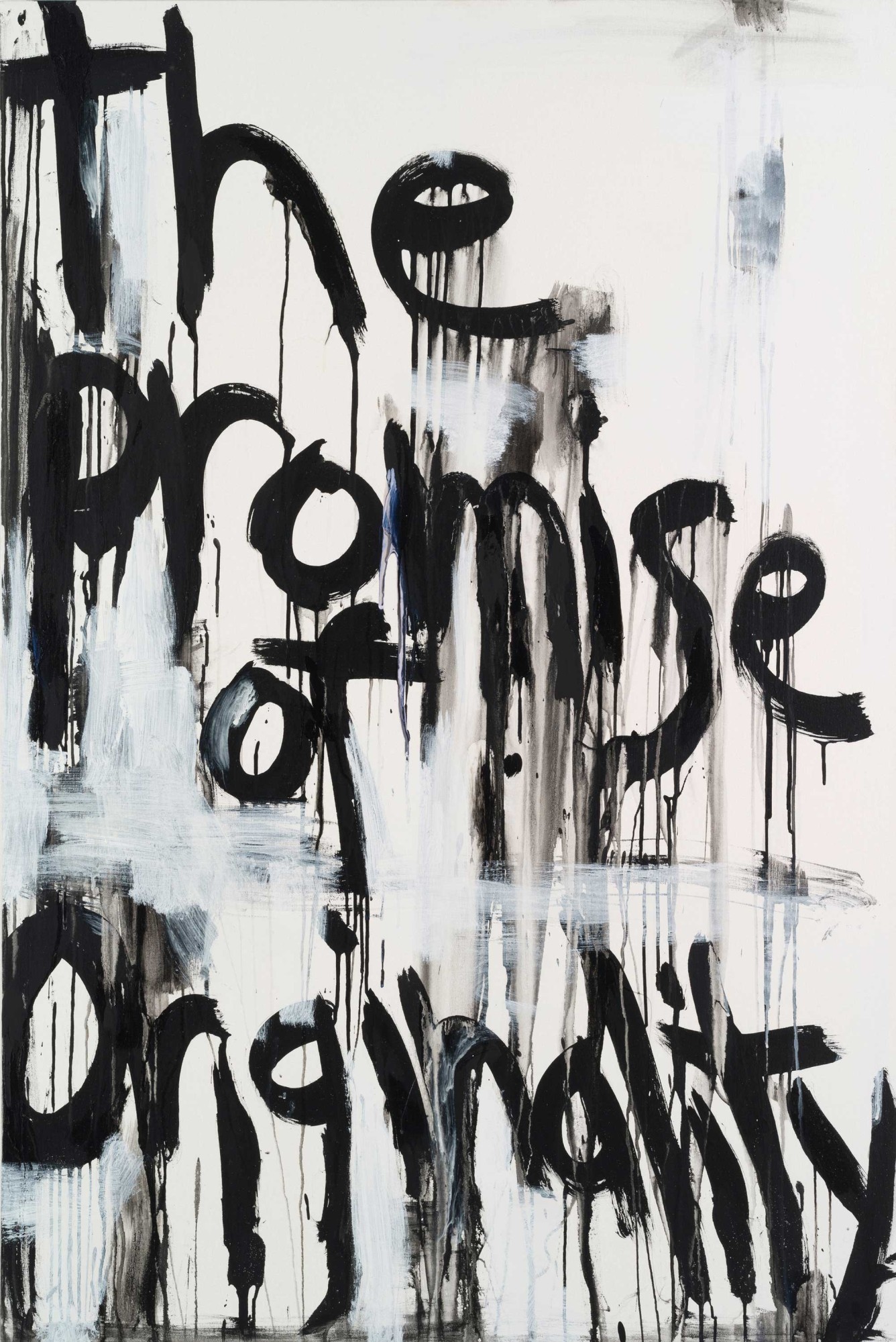
→ Kim Gordon, Stories for a Body, until September 20 2026 at Collection Lambert, Avignon
→ Discover our art itinerary through Arles, Nîmes and Avignon