By dedicating its summer exhibition to Ellsworth Kelly (1923–2015), the Fondation Maeght celebrates not only the work of the American artist, but also a lasting friendship forged in the aftermath of the Second World War. The exhibition recalls the close ties between collectors Marguerite and Aimé Maeght and the artists they championed through their Paris gallery, founded in December 1945, and later through the Fondation Maeght, inaugurated in Saint-Paul-de-Vence in July 1964.
Ellsworth Kelly was first introduced at the Galerie Maeght in the group exhibition Tendance (1951), before being given his first solo exhibition there in 1958. He later collaborated with publisher Adrien Maeght on a series of plant lithographs, based on drawings made in the garden of the Maeght family home in Saint-Paul-de-Vence, where he was a frequent guest.
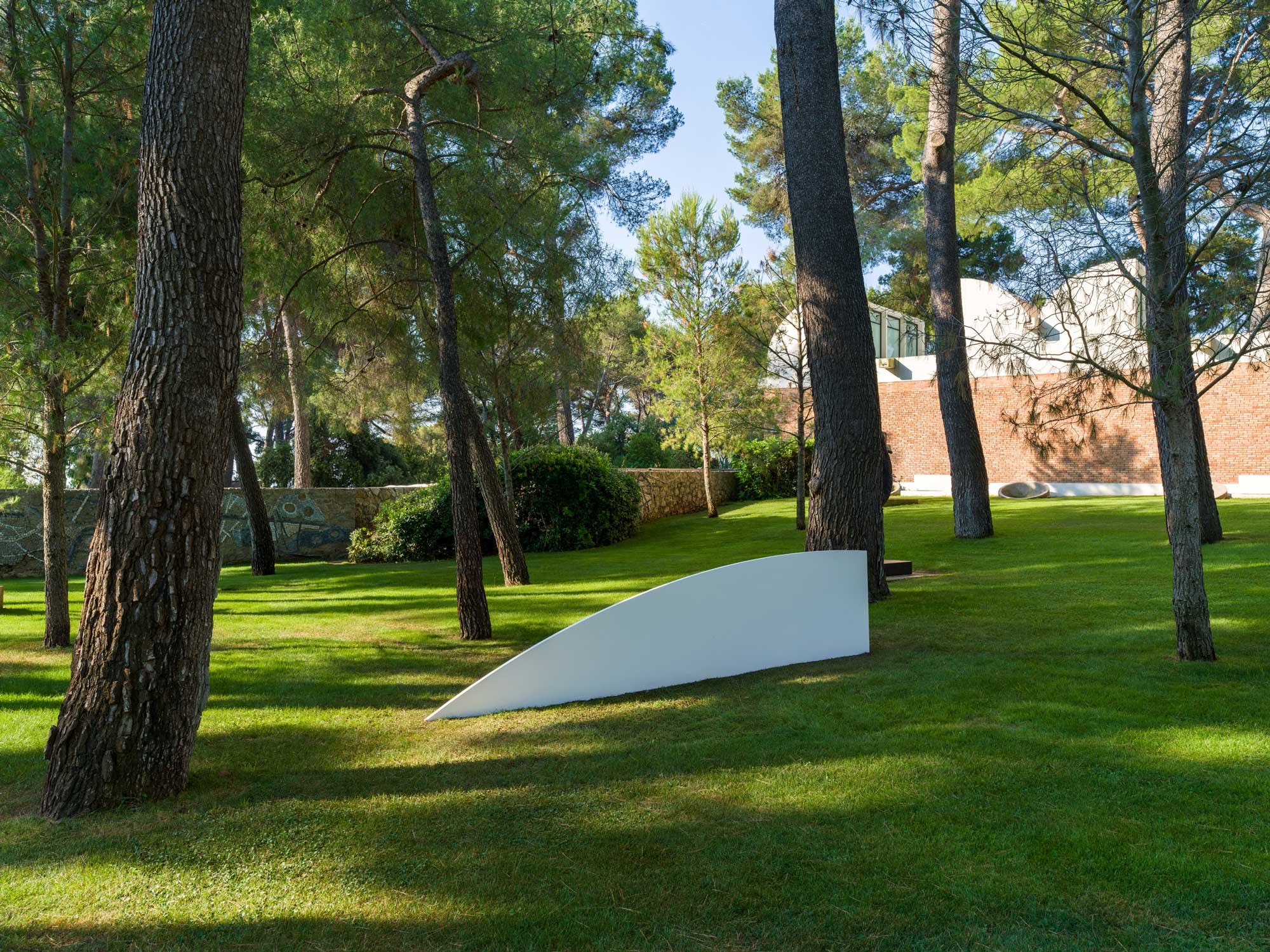
Curated by art historian Éric de Chassey, a leading specialist in American abstraction and a close friend of the artist until his death in 2015, the exhibition sheds light on previously overlooked aspects of Kelly’s work, offering a fresh perspective on his artistic practice.
Rather than presenting a sequence of abstract works, the exhibition invites visitors to see the world as Kelly did. His geometric forms no longer appear as autonomous compositions, but as what they first were: fragments of the visible world, patiently observed, simplified and transformed through painting. Kelly’s abstraction is revealed not as a departure from reality, but as a way of distilling its most essential structure.
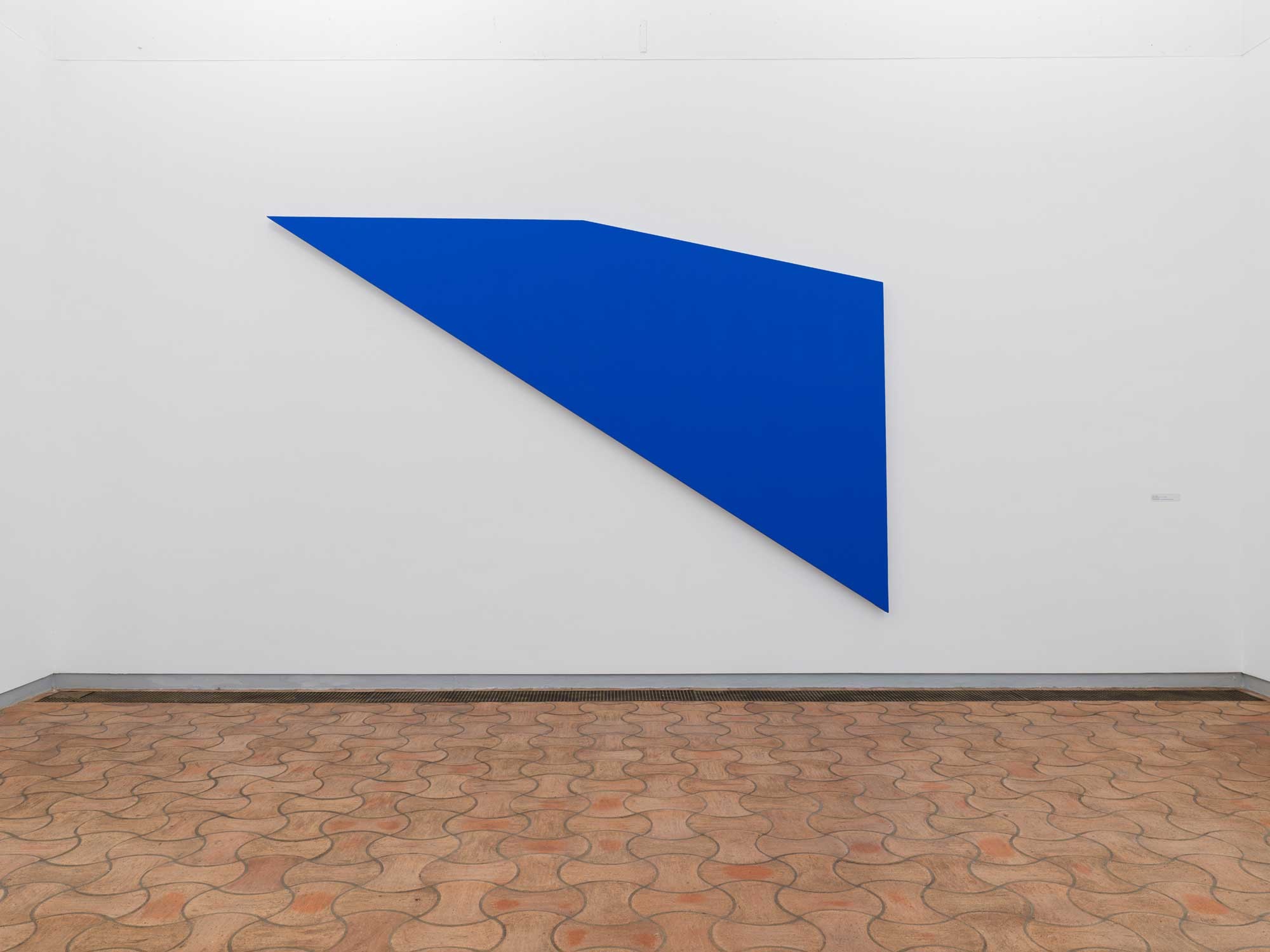
As an art history student, I first encountered Ellsworth Kelly as one of the leading figures of Colour Field painting. Emerging in the late 1940s with artists such as Mark Rothko, Barnett Newman and Clyfford Still, and later developed by Morris Louis and Kenneth Noland in the 1950s, the movement stood in contrast to the gestural intensity of Abstract Expressionists like Jackson Pollock and Willem de Kooning, favouring expansive fields of colour stripped of expressive brushwork.
For a long time, I instinctively associated this painting with the vast landscapes of America. Was it the result of taking the term Colour Field too literally? Or perhaps a memory of the rapeseed fields that surrounded my childhood home each spring? Either way, I saw little more than an arrangement of coloured planes.
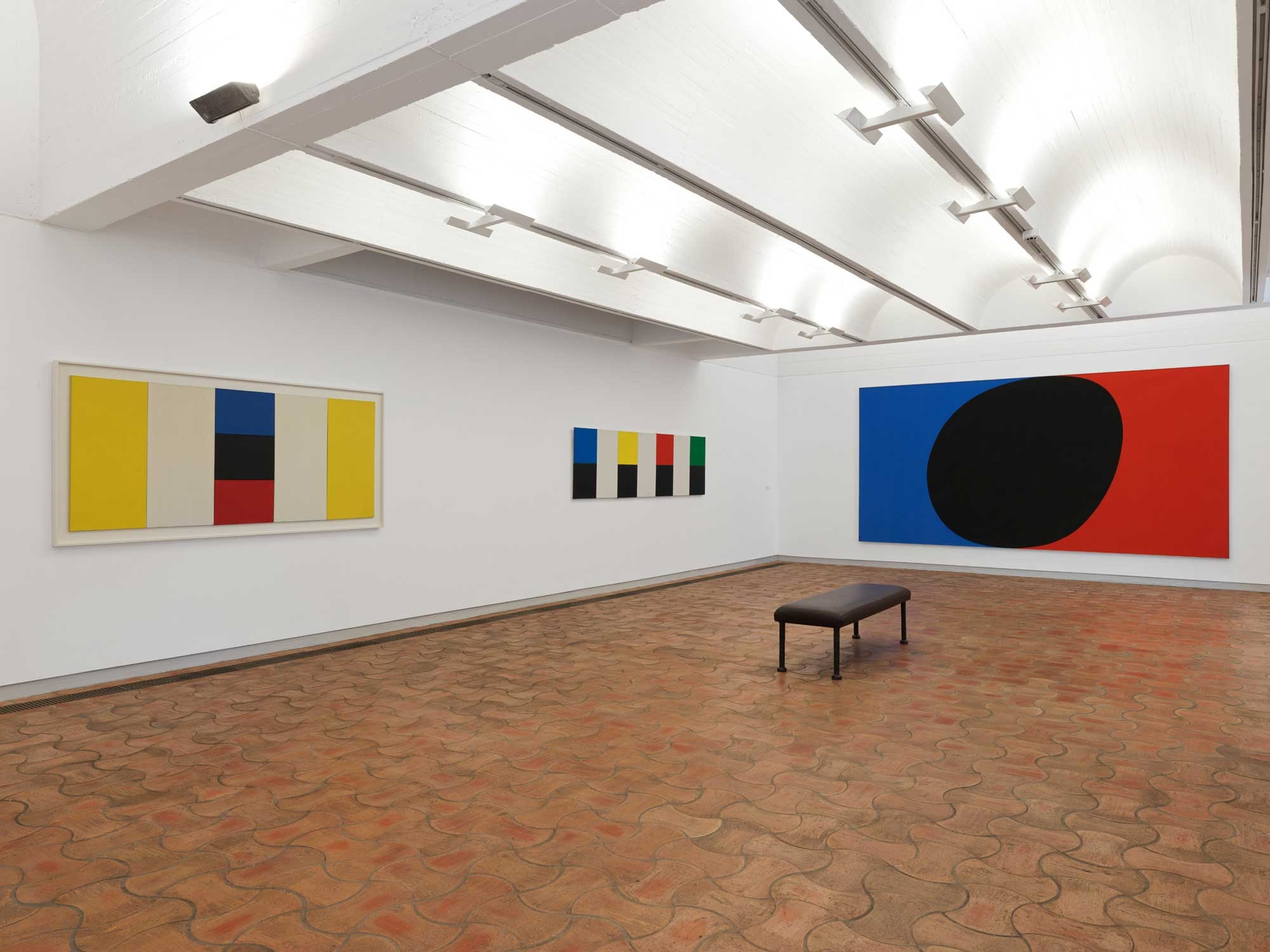
Fascinated by the monumental scale of these distinctly “American” paintings and by Kelly’s radical approach, I had never stopped to wonder where his geometric forms came from. I had imagined them as purely mental constructions — forms born of the mind, even if they sought, in their own way, to recompose the visible world.
One of the great strengths of this exhibition, aptly titled At the Water’s Edge, is that it gently dismantles this assumption.
And it does so without relying on theoretical discourse. The exhibition itself makes the case. The works speak to one another with such clarity that the wall labels become almost unnecessary. The chronological hanging, far from being incidental, allows visitors to follow the gradual formation of Kelly’s way of seeing, rather than imposing a purely formal reading of his work.
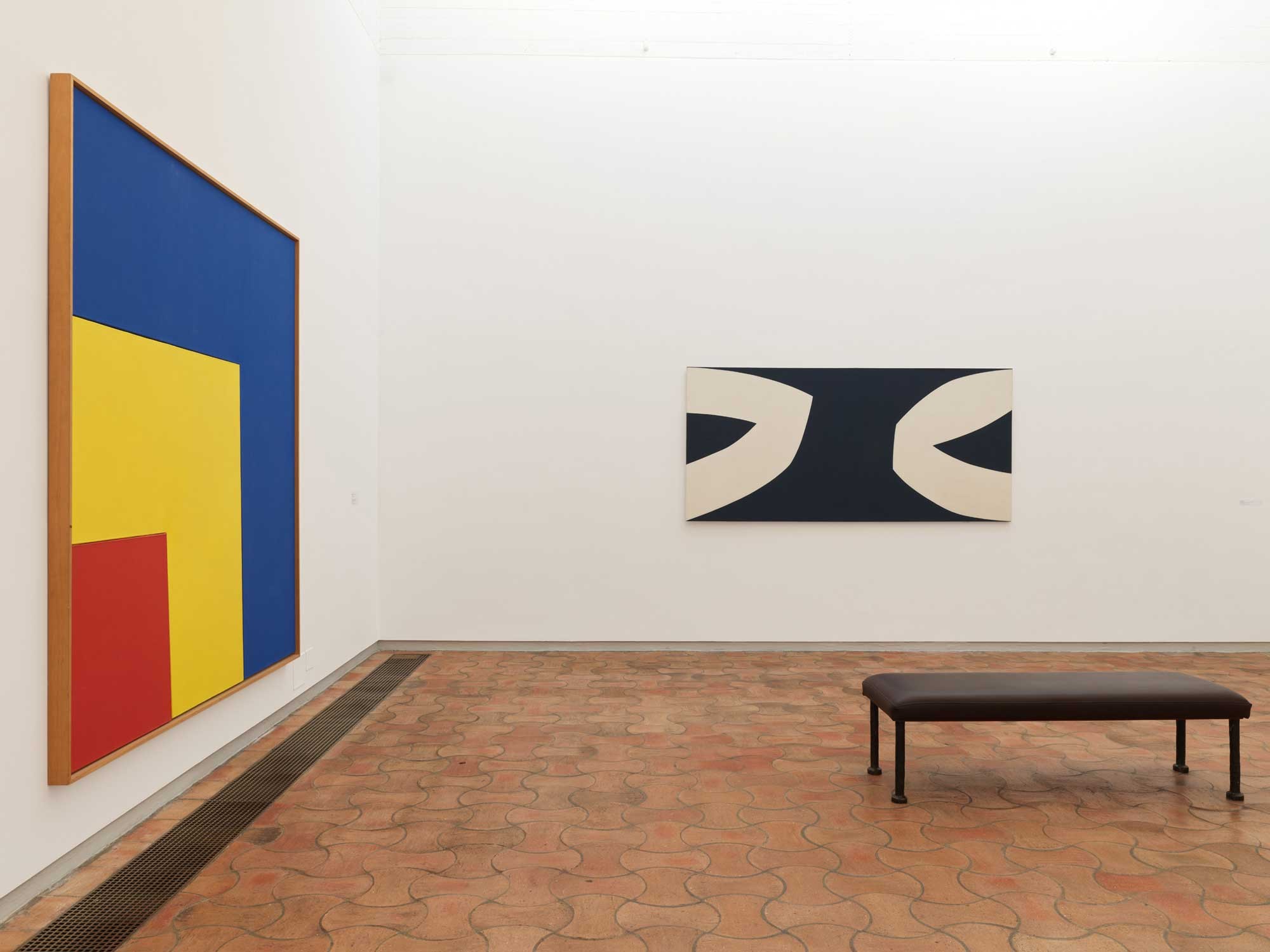
When Kelly settled in Paris in 1948, on the Île Saint-Louis, he spent hours observing the reflections on the Seine. His earliest drawings already reveal how the visible world gradually simplifies into geometry. By 1951, the foundations of his approach were firmly in place: nature was not abandoned in favour of abstraction, but remained its starting point. As Éric de Chassey observes, “the solution is purely abstract, the method is impersonal,” yet it remains rooted in observation.
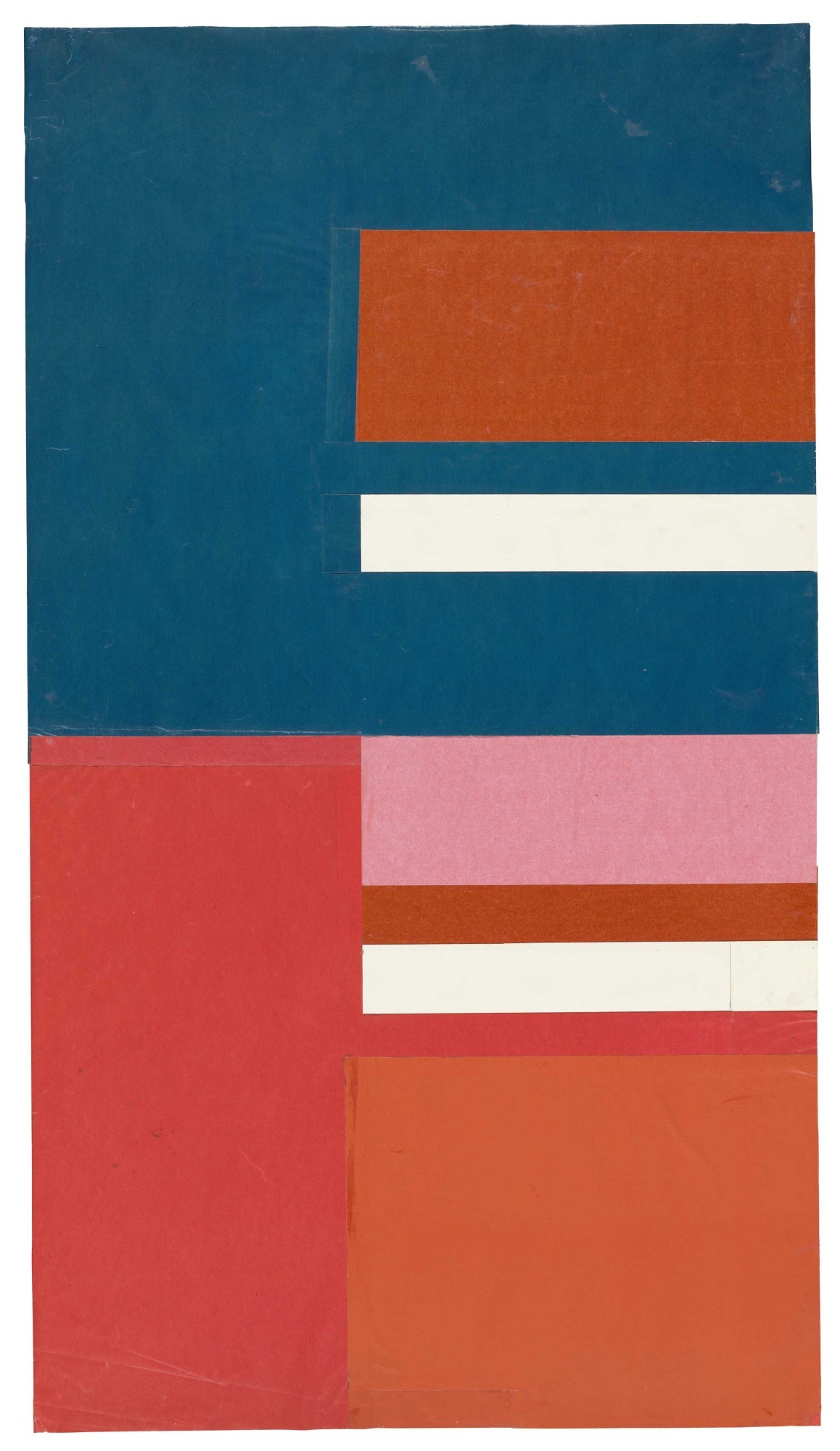
His time on the French Riviera confirmed this intuition. The coloured bands of Quai (1), Sanary (1952) are not the result of abstract invention, but derive from the colours of the boats moored in the harbour, together with the pink of a man’s skin glimpsed on the quay. At the time, Kelly turned to geometric forms as a way of removing traces of personal expression from his work. Yet, as Éric de Chassey reminds us, “everything is nourished by personal and individual things” — by what Kelly saw and experienced.
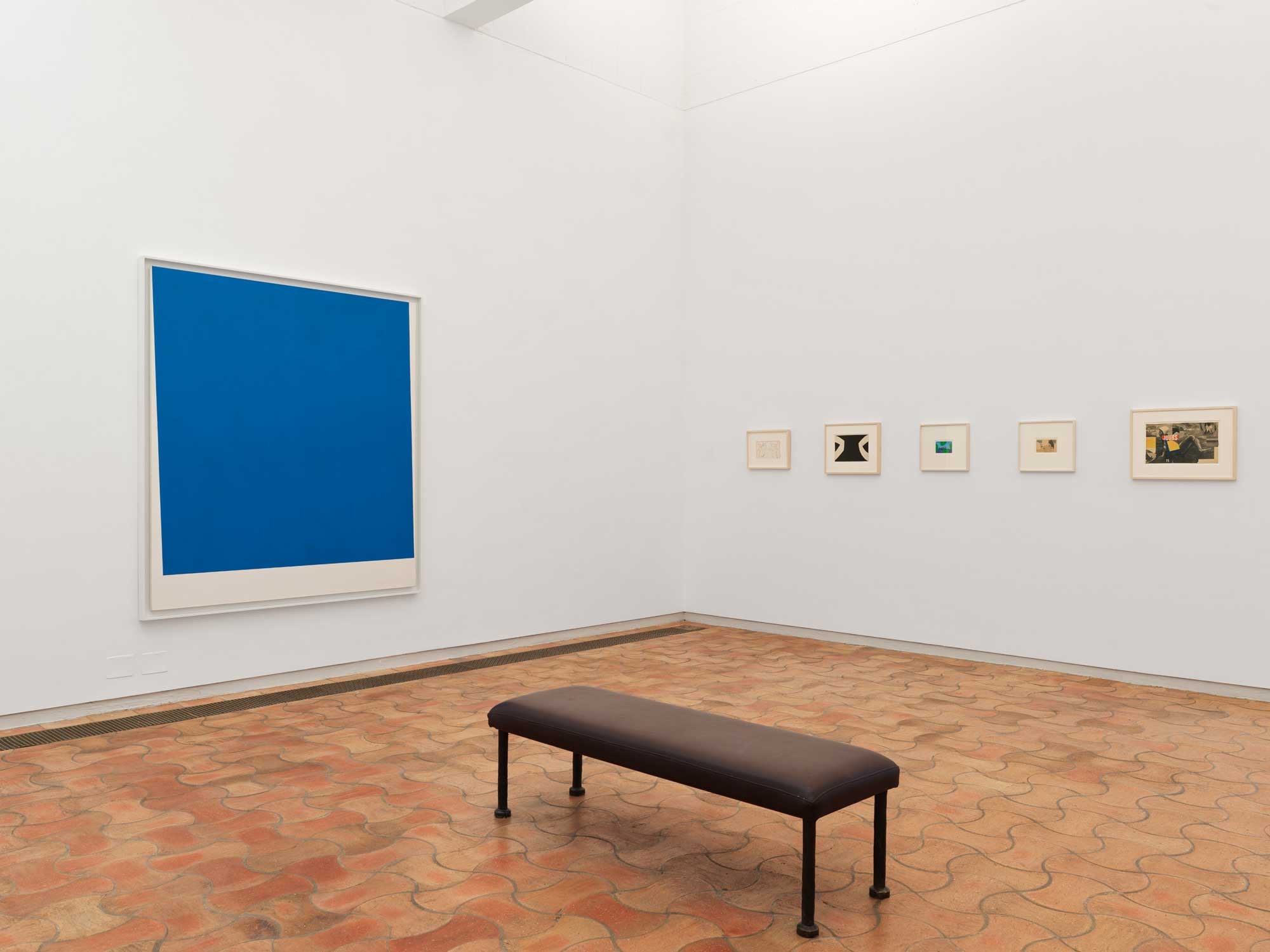
The exhibition continues this demonstration in the galleries devoted to Kelly’s American years. The large paintings that might appear to be his most abstract works are, in fact, rooted in the most ordinary of visual experiences: the shadow cast across a table (North River, 1959), the colours of a landscape (Red Yellow Blue, 1963), or the shape of a stretch of water seen between two riverbanks (Lake II, 2002), shown here alongside its preparatory drawing, Study for Lake (1970). The exhibition makes clear that abstraction never erases the world; rather, it distils it to its essence.
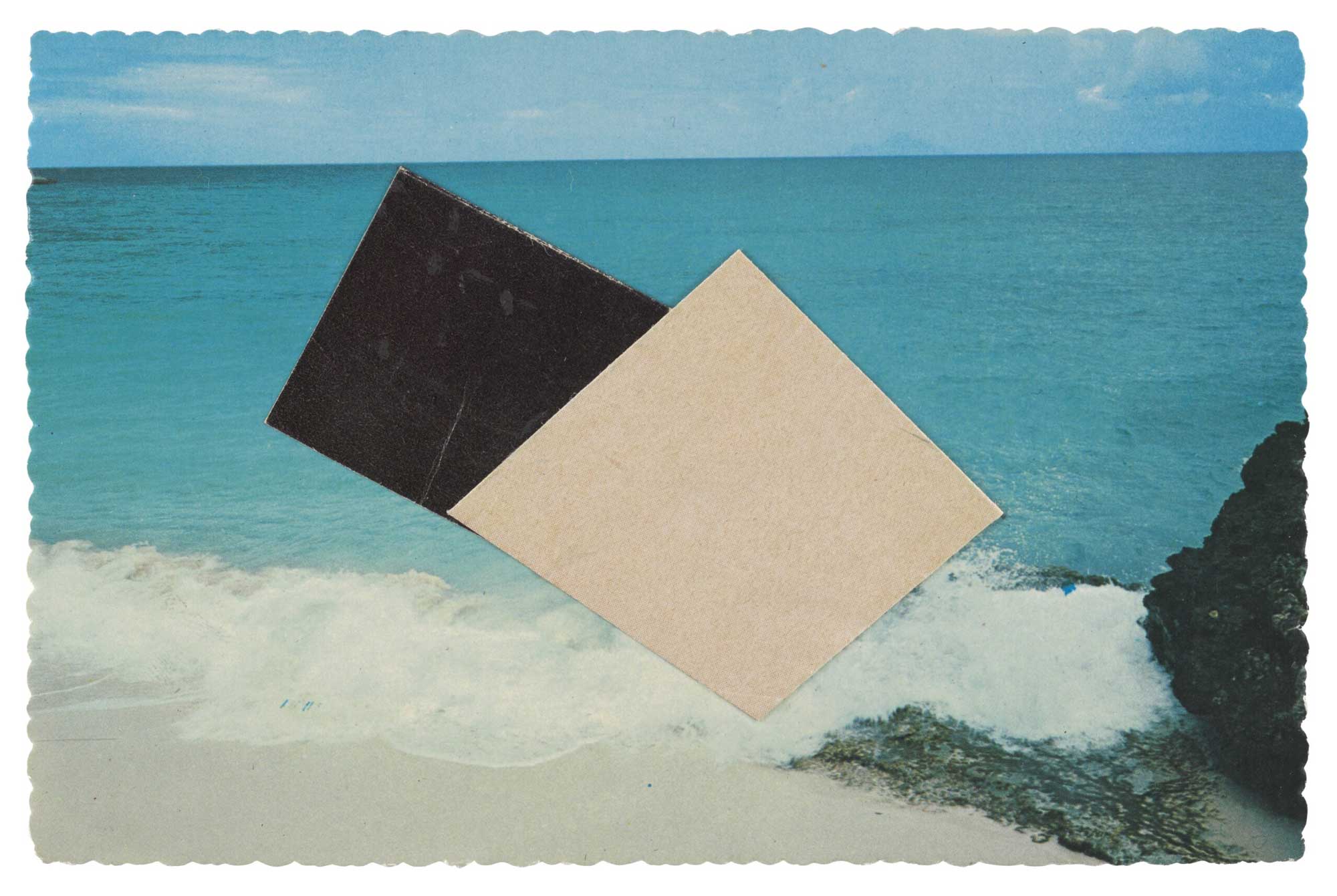
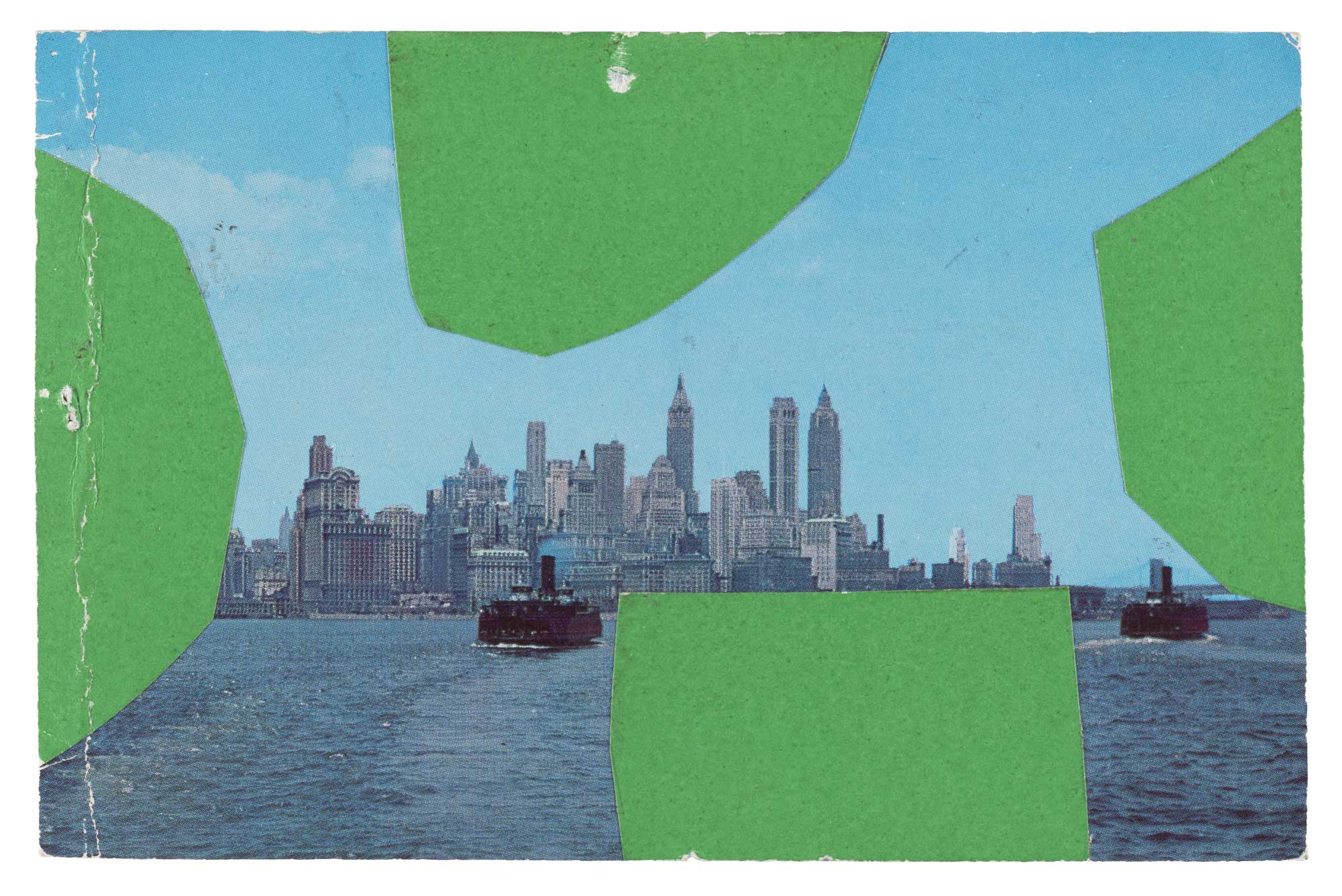
The same principle is at work in the postcard collages Kelly began making in the late 1950s and continued throughout the 1970s during his winter stays in Saint Martin. He combines seascapes with geometric forms and fragments of bodies cut from magazines. A mouth stretches across a coastal landscape; a portrait of Marilyn appears on a Caribbean beach. Humour is never far away. More than playful diversions, these collages reveal how deeply Kelly’s visual language remained rooted in what he saw.
In doing so, the exhibition achieves its most profound ambition. What it reveals most convincingly is that beneath the geometric rigour of Kelly’s work lies a deeply felt experience of landscape, light and water. It is here that the exhibition’s title, At the Water’s Edge, fully comes into its own.
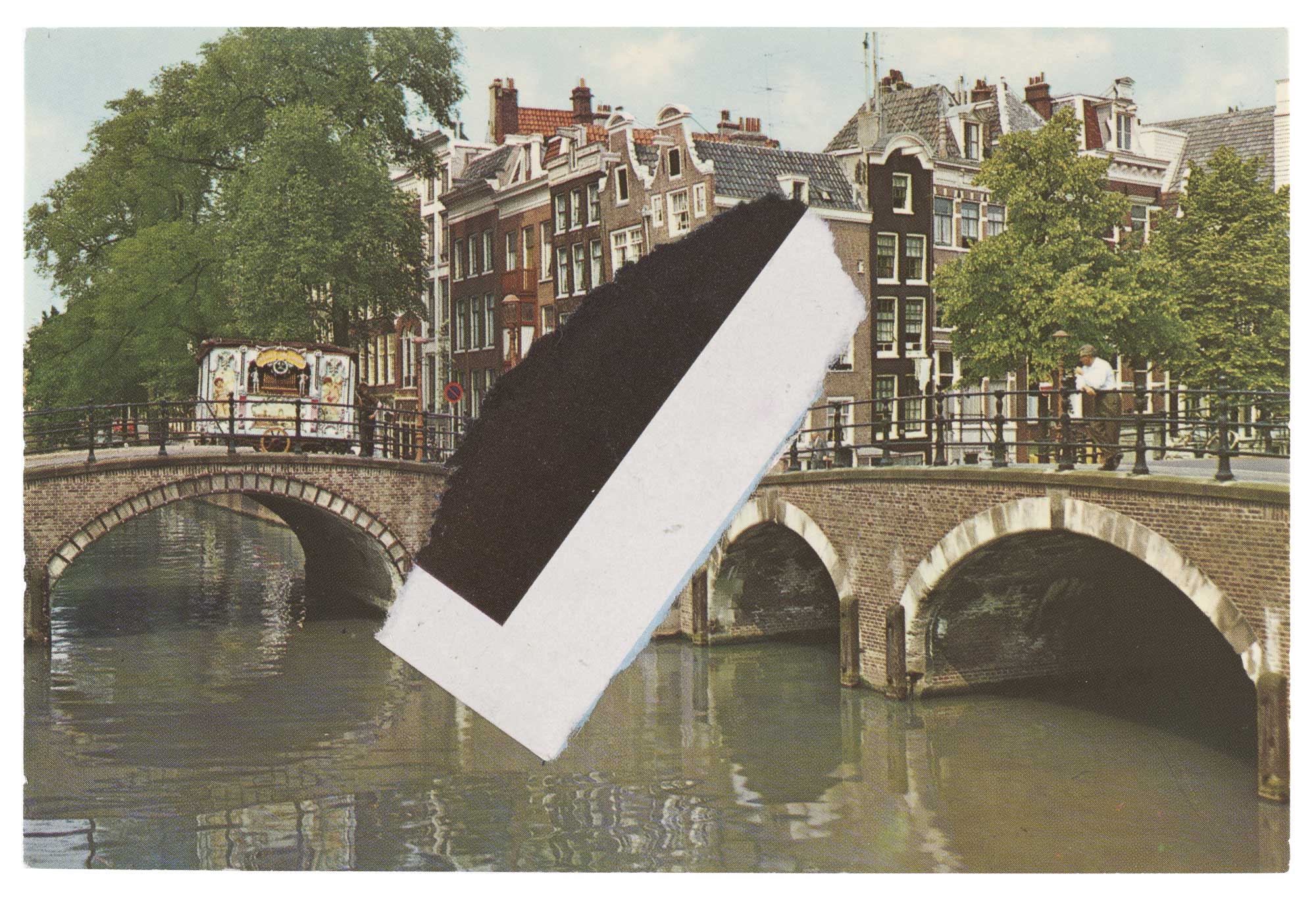
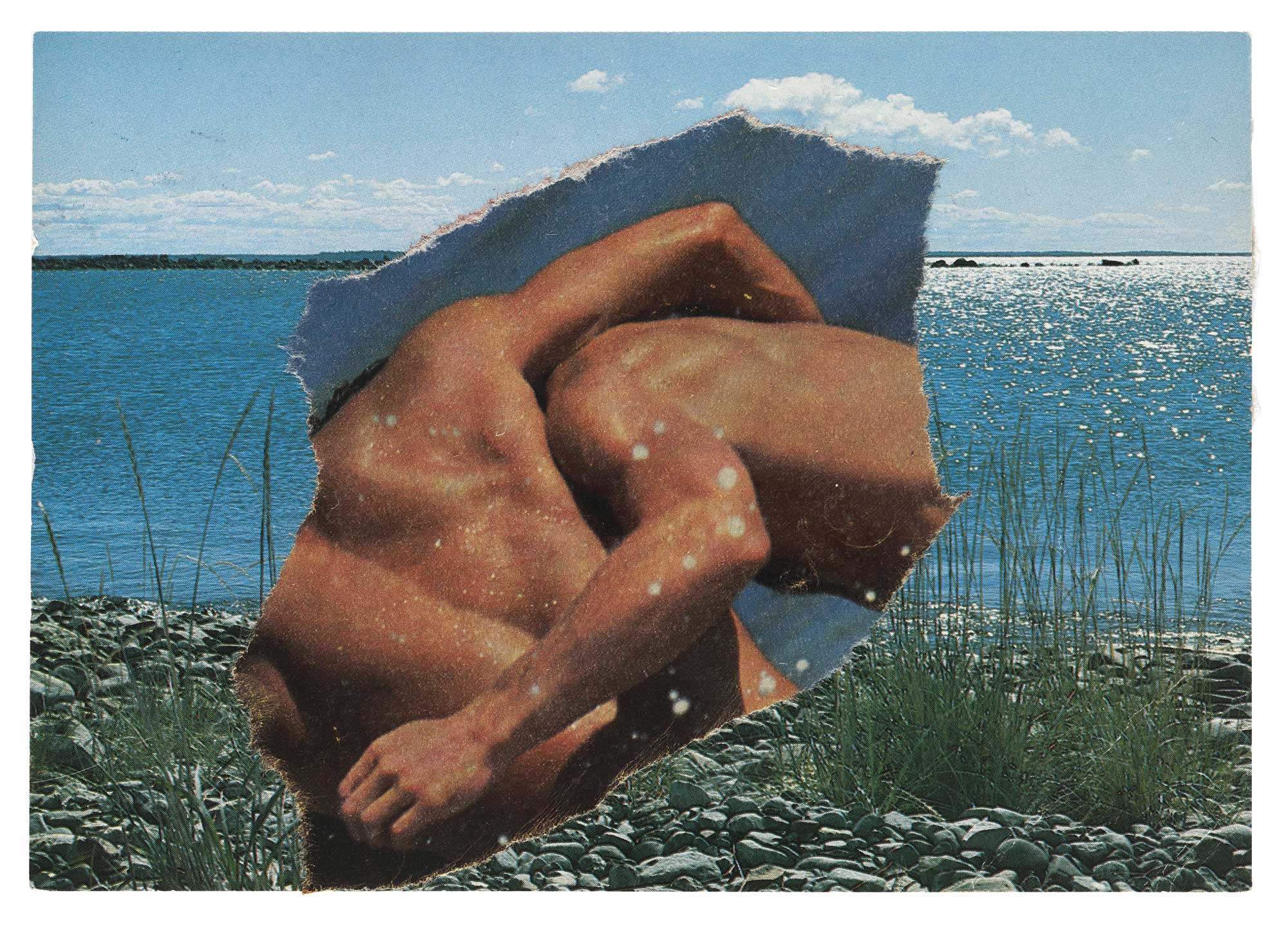
→ Ellsworth Kelly: At the Water’s Edge, until 15 November 2026 at Fondation Maeght, Saint-Paul-de-Vence