This summer, the Collection Lambert invites three major artists to unfold their distinctive worlds in an immersive exhibition entitled Le murmure des libres: Indian artist Shilpa Gupta, Palestinian artist Jumana Manna and Korean artist Geumhyung Jeong. In conversation with Stéphane Ibars, the institution’s artistic director and co-curator of the exhibition, Jeong discusses her installation on the upper floor of one of the Collection Lambert’s two historic townhouses. Blurring the boundaries between living bodies and artificial machines, her poetic and unsettling work offers a sensitive portrait of a present in which humans and technologies are learning to coexist…
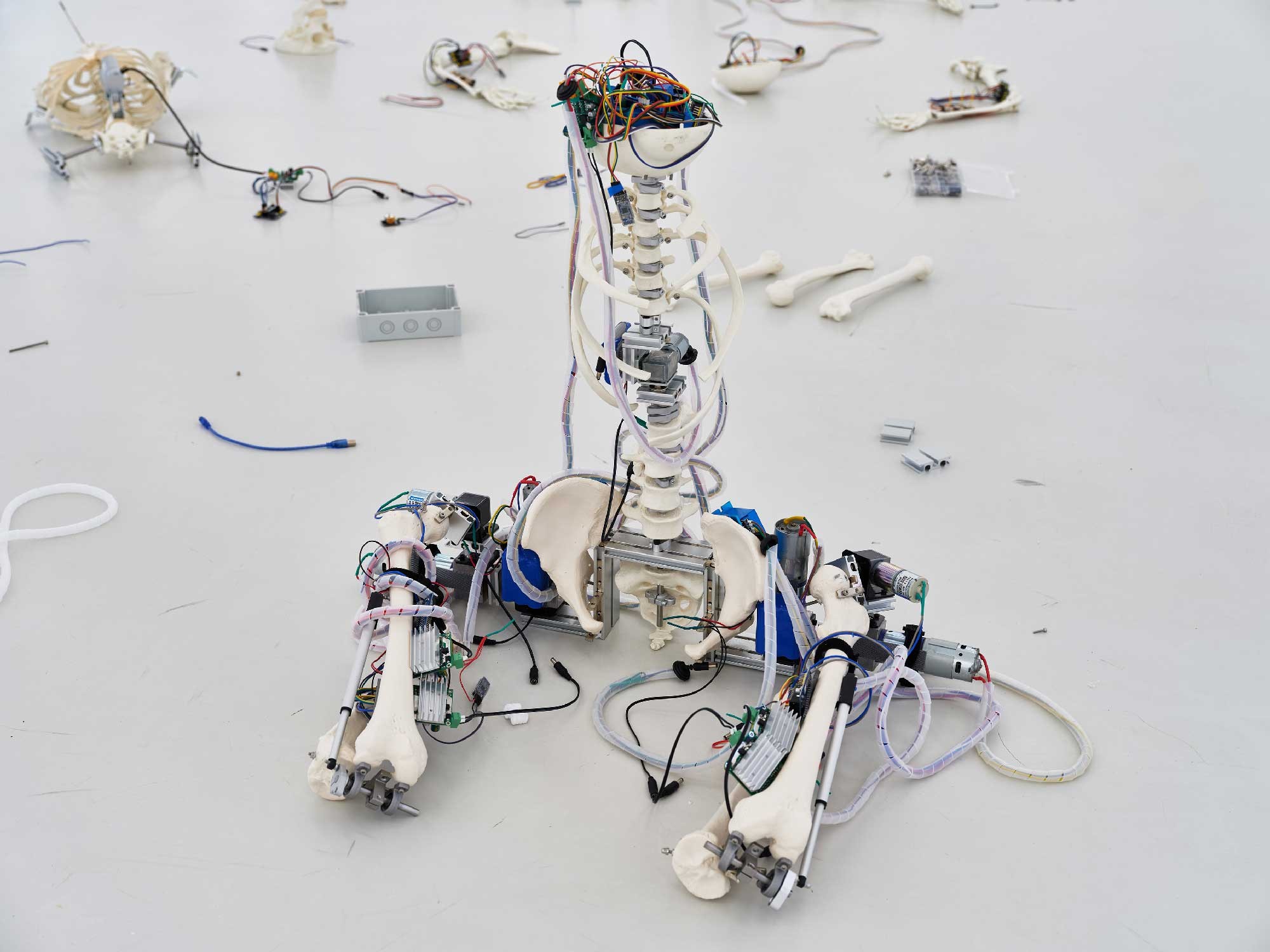
Stéphane Ibars: For this exhibition at the Collection Lambert, you have reconfigured your work Under Construction to respond specifically to the architecture of the space. The work unfolds as both an installation and a performance, shifting between different states rather than settling into a definitive form. How do you approach this continual reconfiguration of your work across different media—sculpture, installation, video and performance?
Geumhyung Jeong: Sometimes I think that if a sculpture is powerful enough, it does not need any additional information, such as a video shown alongside it. But I also accept that my robots are designed with the possibility of movement and performance built into them; in that sense, it becomes more interesting to see the sculpture accompanied by a performance video. As for the form of the video, I like to try things that would be impossible in a live performance, and to show the making process or the story of these bodies being put to the test—and sometimes failing.
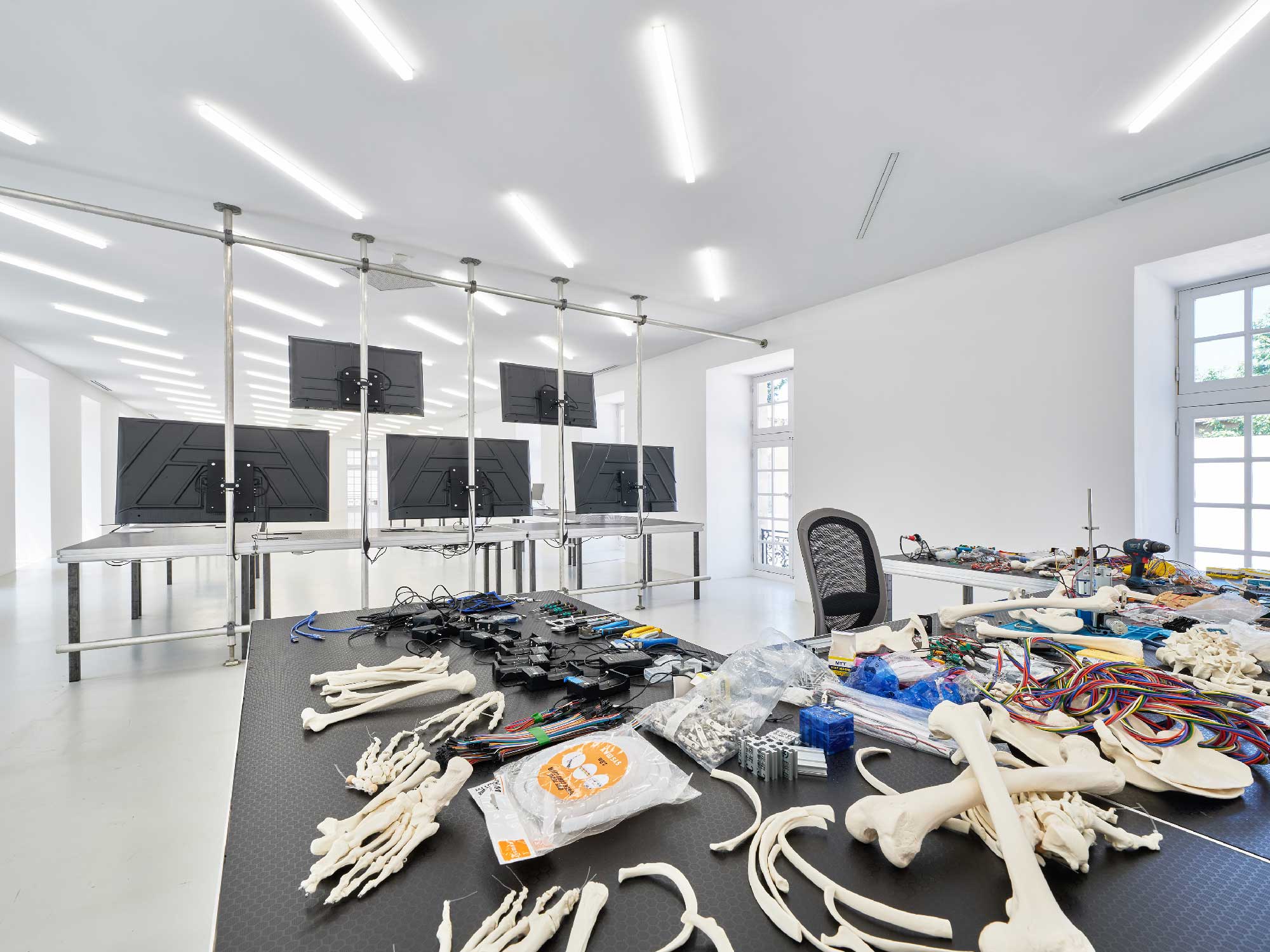
S.I.: The installation, with its arrangement of robotic components on the table, tells the entire story of the machines: how they are made and what they are made of. The pieces on display are like the organs of the machine’s body; they can be read as anatomical information specific to each one. They may represent not only the prehistory of the machines, but also their future—a kind of contingency plan.
G.J.: As in most of my works, the boundary between process and outcome is not clearly defined. The installation will remain under construction, and I will indeed need to use the parts and tools laid out on the table to repair or replace damaged sections of the robots while preparing for the live performances. At the same time, I imagine that the arrangement of objects on the table could generate a narrative independent of the robots, like a choreography of the whole. Beyond being a sculptural project in a constant state of becoming, I also see this work as choreographic; it is a form of dance too. The idea of constructing the sculptures’ bodily functions arose from an imitation of human movement, yet their movements reveal precisely how mechanical they are.
S.I.: The installation is organised around two distinct environments: one in which visitors move among mannequin fragments, mechanical parts and robotic components; the other evoking both a control room and a workshop. What kind of relationship do these two spaces establish?
G.J.: In the gallery at the Collection Lambert, I see the space as divided into two sections: a first area, immediately visible upon entering, followed by a second that is revealed beyond the corner. I imagine visitors first encountering the sculpture before entering the second space, almost as if stepping into a control room. The videos show moments when the robots are put to the test—their repeated failures and gradual progress. It is like gaining access to a private folder on someone’s personal computer that was never meant to be shared. Alongside the video installation, there is also a workshop where the development process can continue. I will work there at certain points during the exhibition, creating an improved version of one of the sculptures—literally under construction.
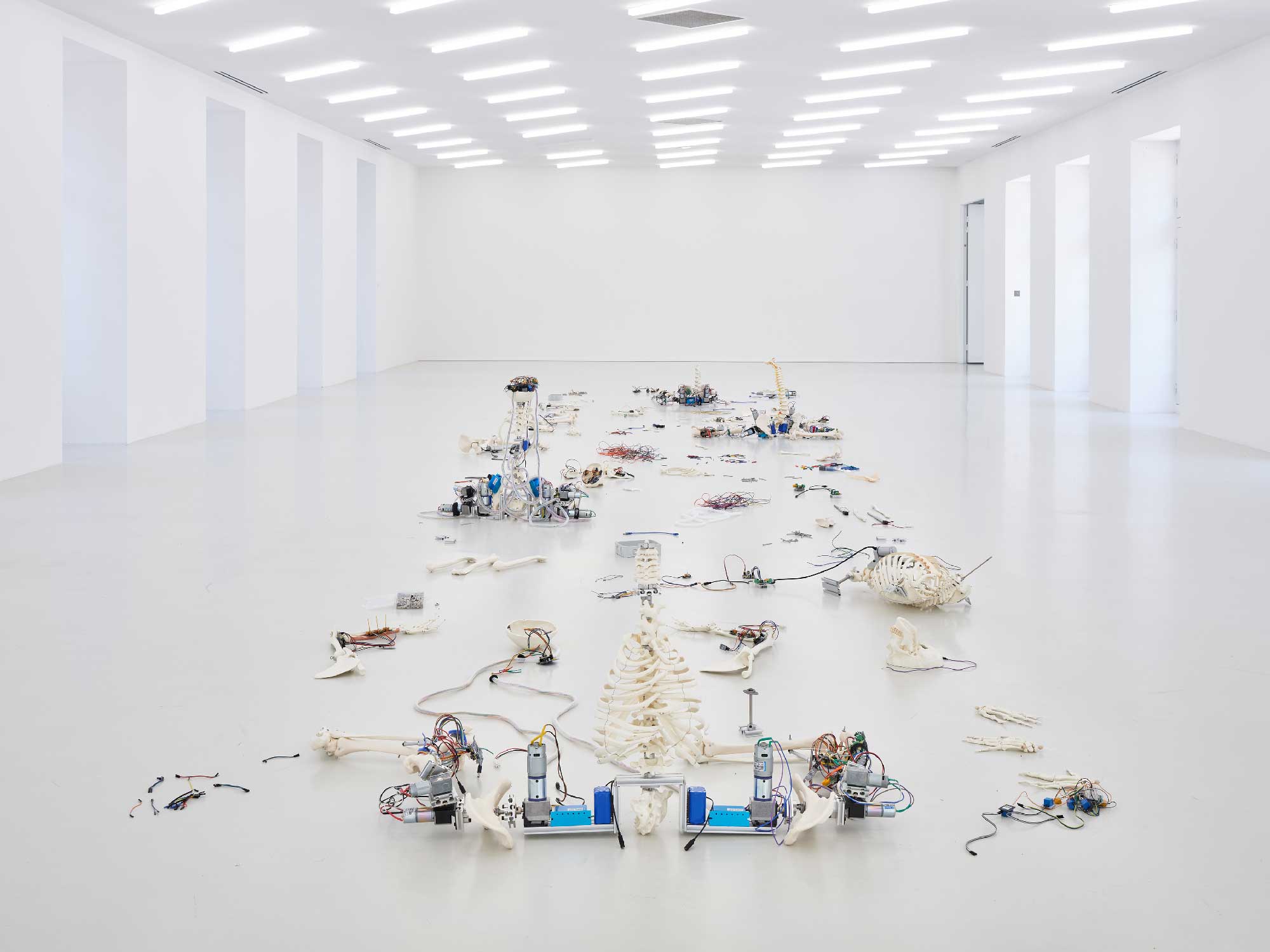
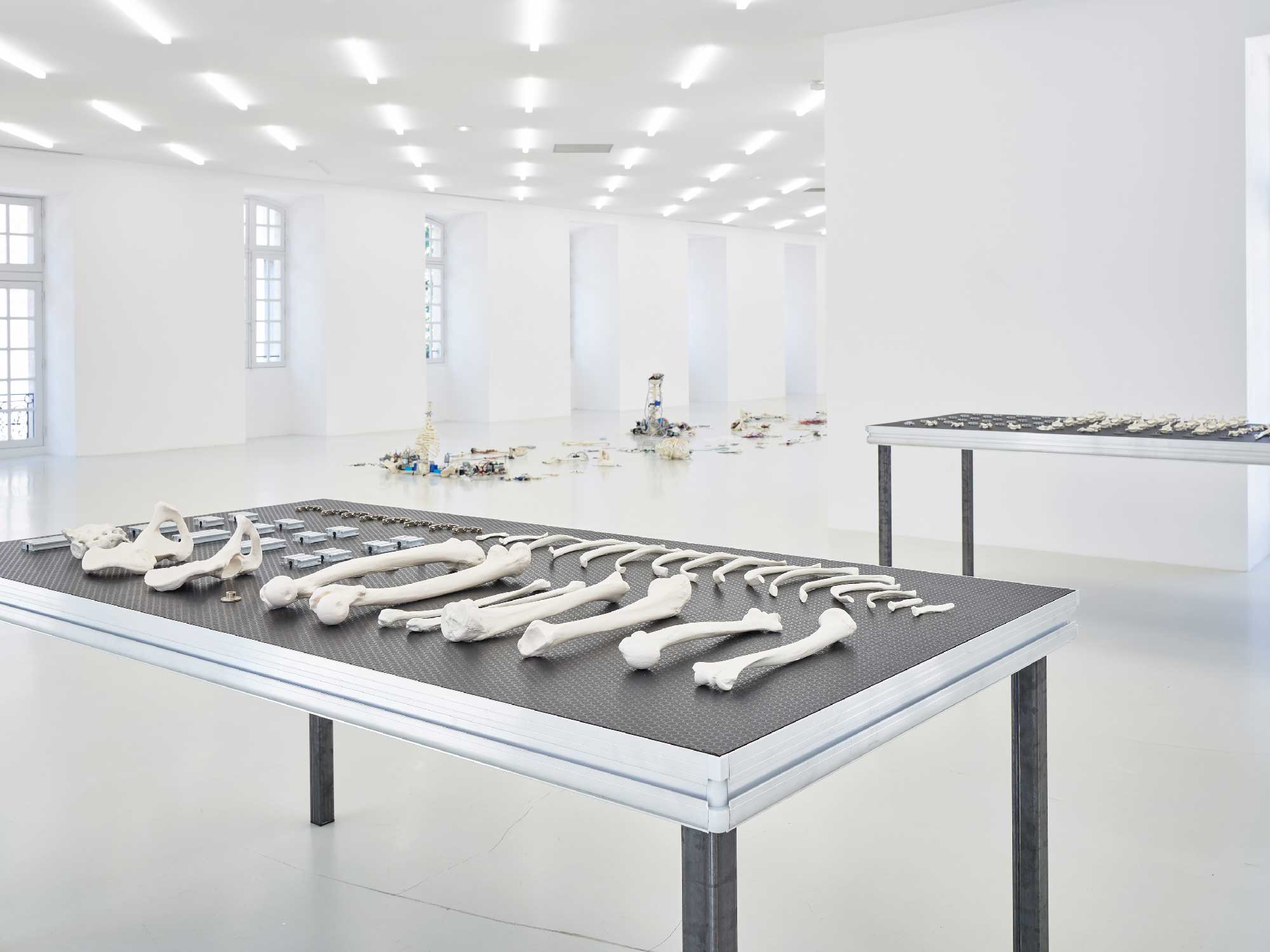
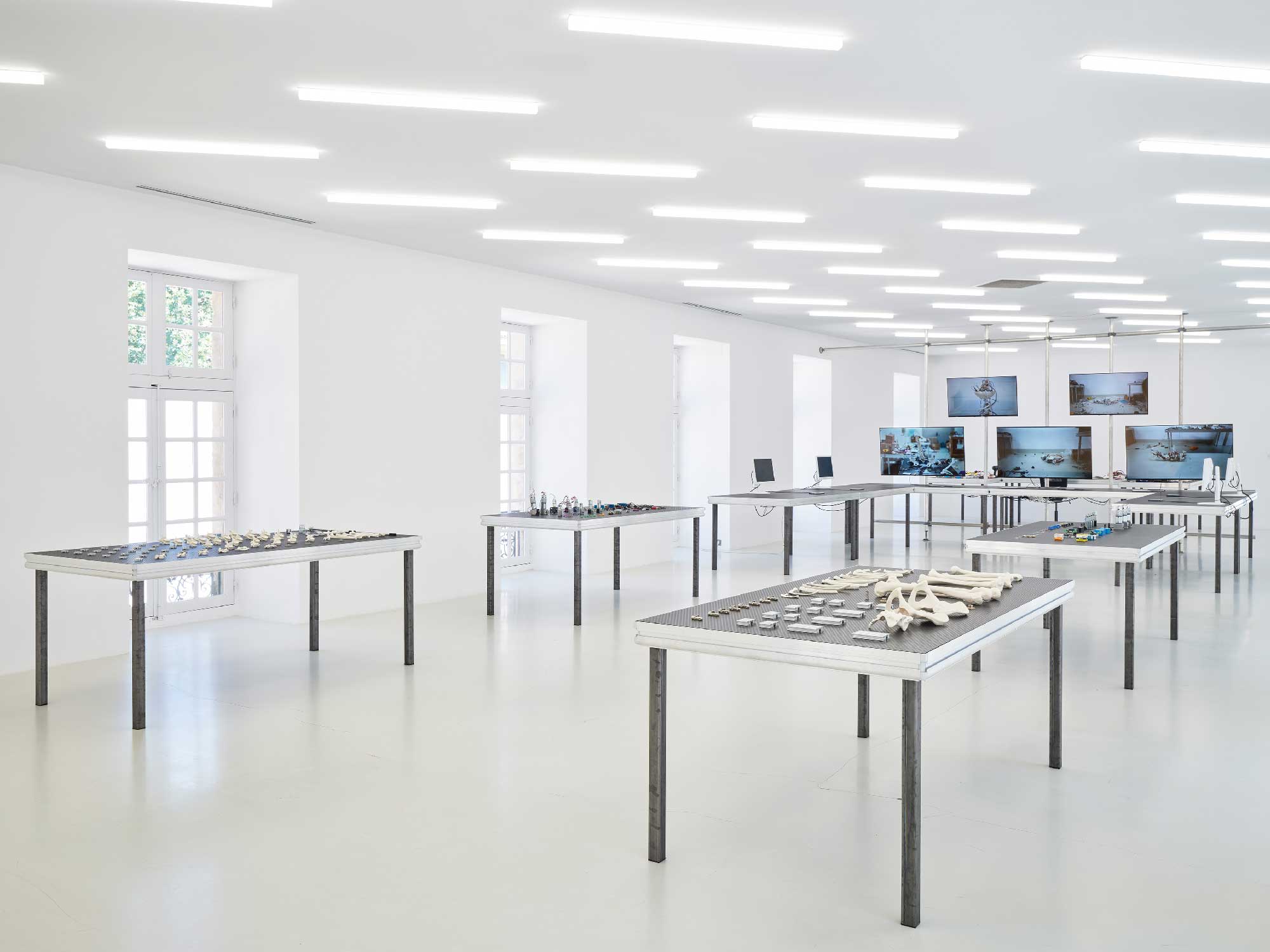
S.I.: Your work foregrounds an intensely physical, almost intimate relationship with machines—through gestures of manipulation, assembly, repair and activation. Rather than speculative futures, what emerges is a present shaped by proximity and dependence. How would you describe your relationship with the machines you work with?
G.J.: Initially, I was interested in the idea of controlling an object remotely, as well as in the remote control itself. More specifically, I was interested in the triangular relationship between the remote control, the object being controlled and the person controlling it. I generally begin by imagining the movements I would like to achieve. Often, things do not work as I had imagined, and I have to revise the plan. But that is when it becomes far more interesting to discover what the machines are capable of within their own physical reality, rather than the hypothetical reality I had projected onto them.
S.I.: In your performances, the audience witnesses the processes through which the work is activated and transformed. The boundaries between fabrication, maintenance and performance begin to blur. What is at stake for you in making these operations visible? Does this visibility alter the status of the work, or the role of the viewer?
G.J.: It is part of the story, rather than a form of display or revelation. Sometimes the performance—or the outcome of the preparation—may fail. At least I can show that I tried.
→ Le murmure des libres, until 20 September 2026 at the Collection Lambert, Avignon
→ Discover our art itinerary through Arles, Nîmes and Avignon