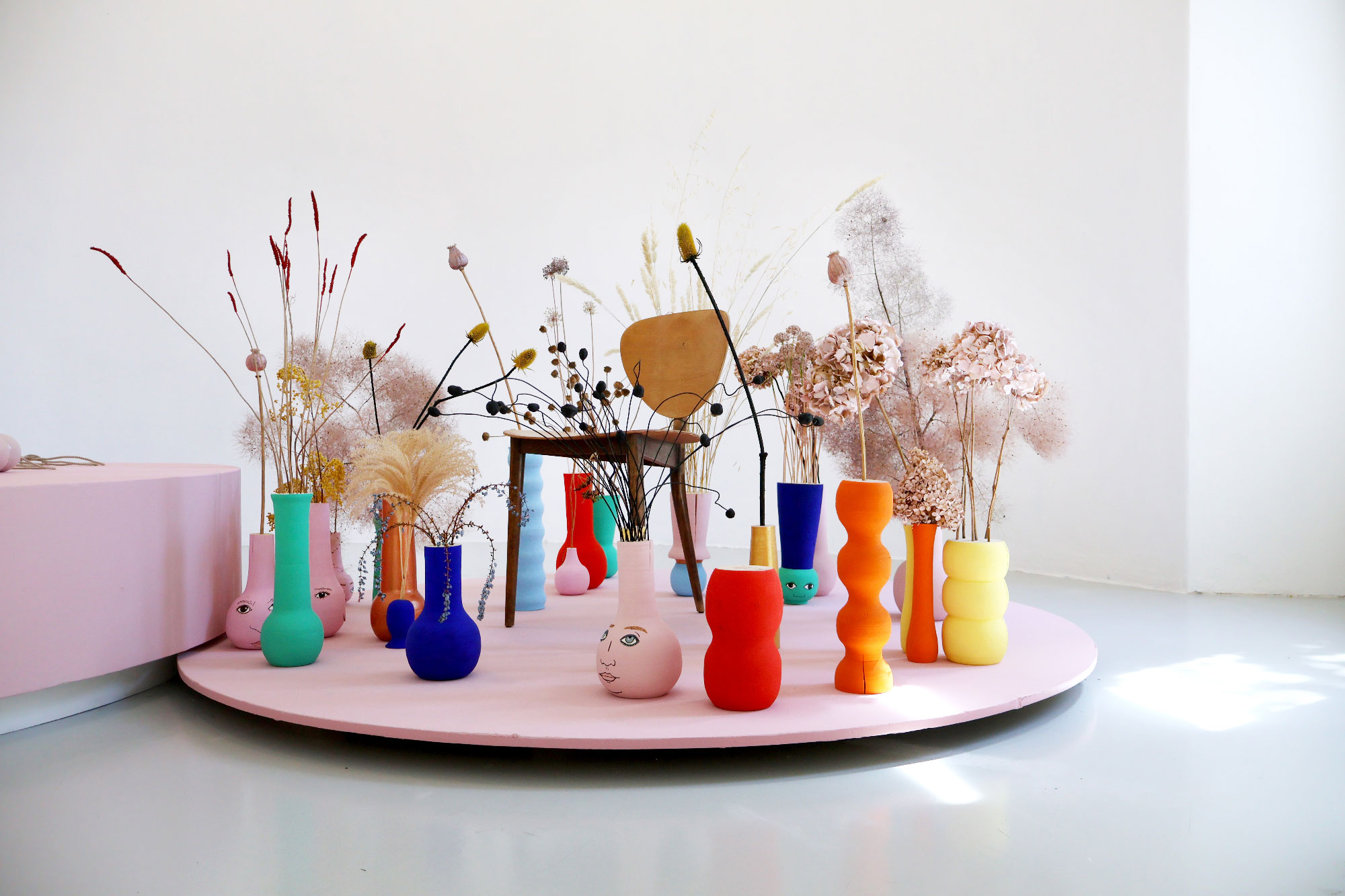
Absolue de rose. The title came naturally to Virginie Barré for her exhibition at the Espace de l’Art Concret in Mouans-Sartoux. Borrowed from the language of perfumery, an ‘absolute’ is the most concentrated extract obtained from a flower—a reference to the May rose cultivated around Grasse. ‘I was quite taken with the history of Mouans-Sartoux and the surrounding area, particularly its perfumery heritage,’ explains the artist. Pink runs through both the exhibition design and the works themselves. But the title also signals a new tone in her practice. ‘It is still a highly gendered colour, associated with femininity. I am at a point in my life where I enjoy embracing that kind of notion, emphasising it, but also playing with it.’ In an infinite range of shades, pink envelops sculptures, costumes, objects and drawings in an unapologetic softness.
Virginie Barré first came to prominence in the early 2000s with a practice rooted in sculpture that gradually expanded into space, taking the form of installations, films, costumes and sculptural works. A whimsical figure with a singular imagination, she began creating characters that seem to have stepped out of a science-fiction film, a fantastical tale or a maritime adventure.
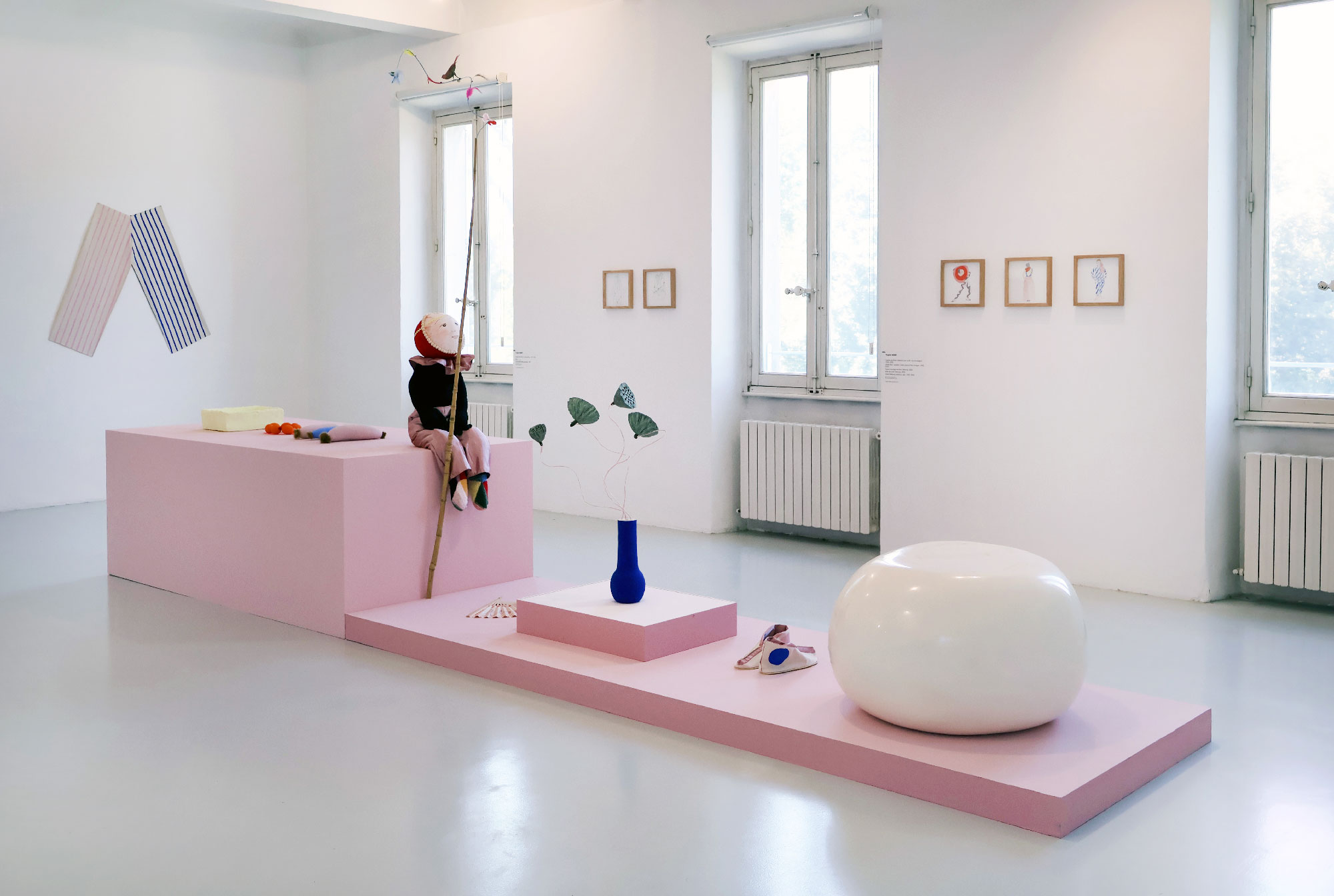
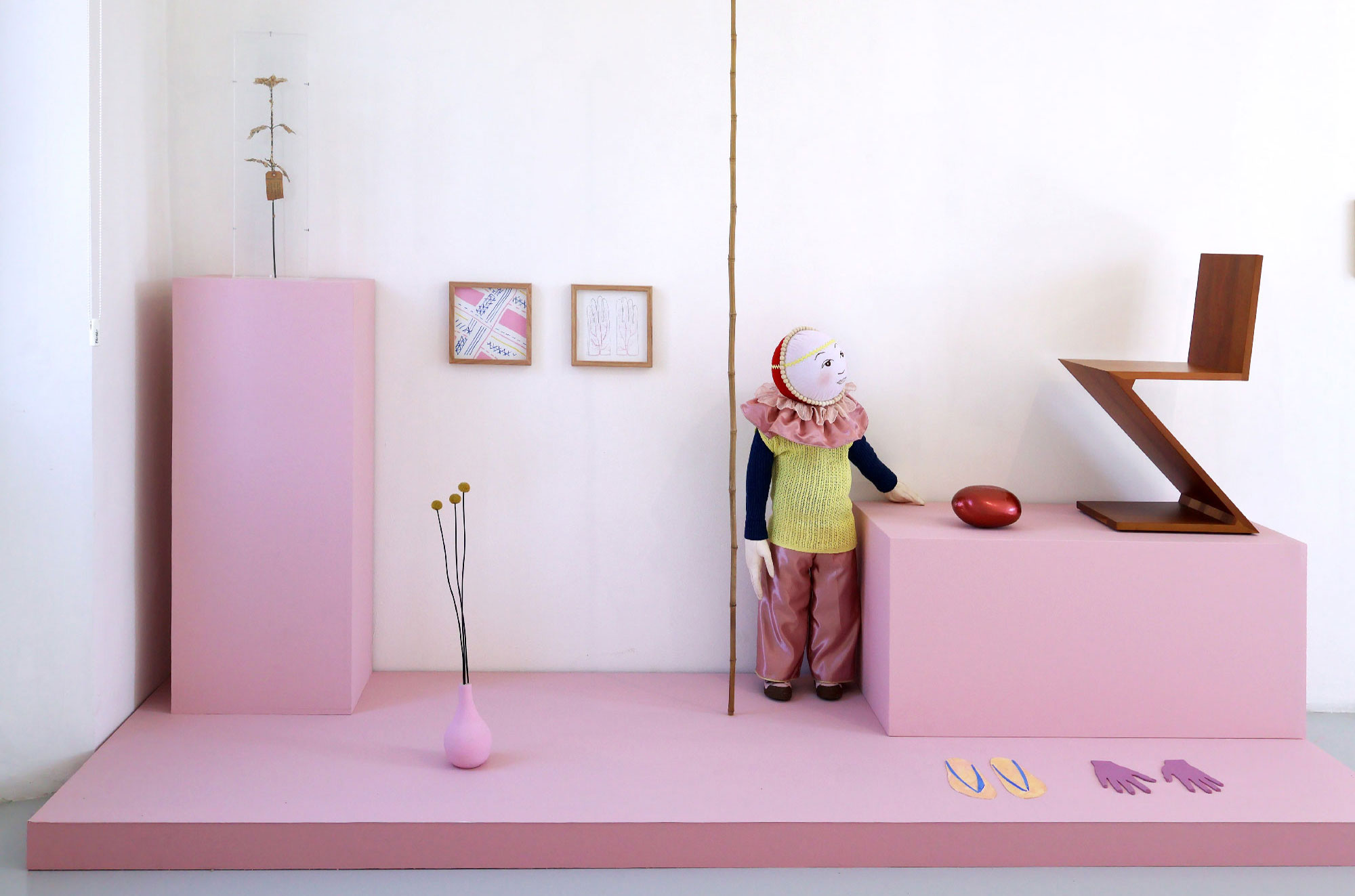
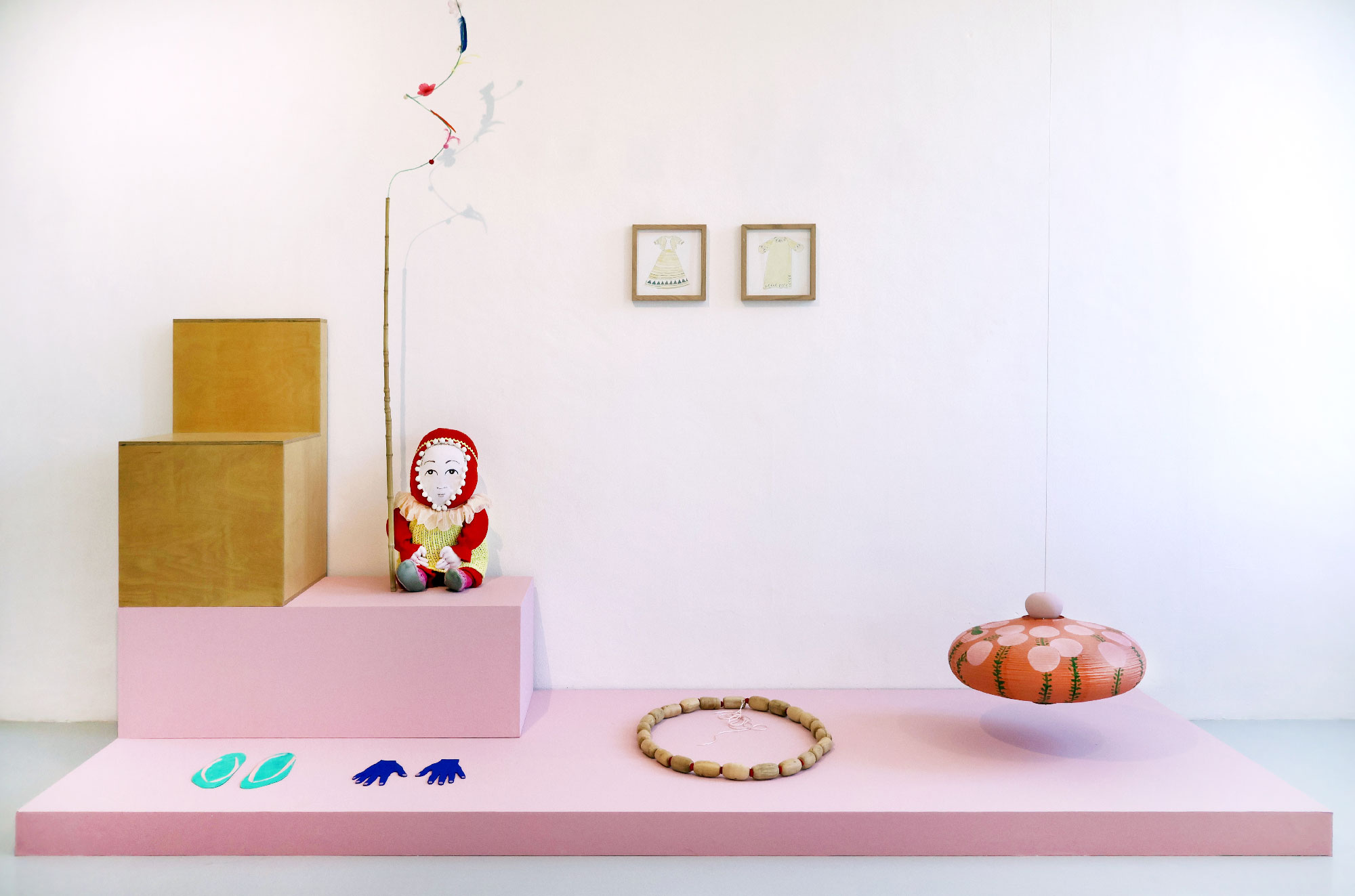
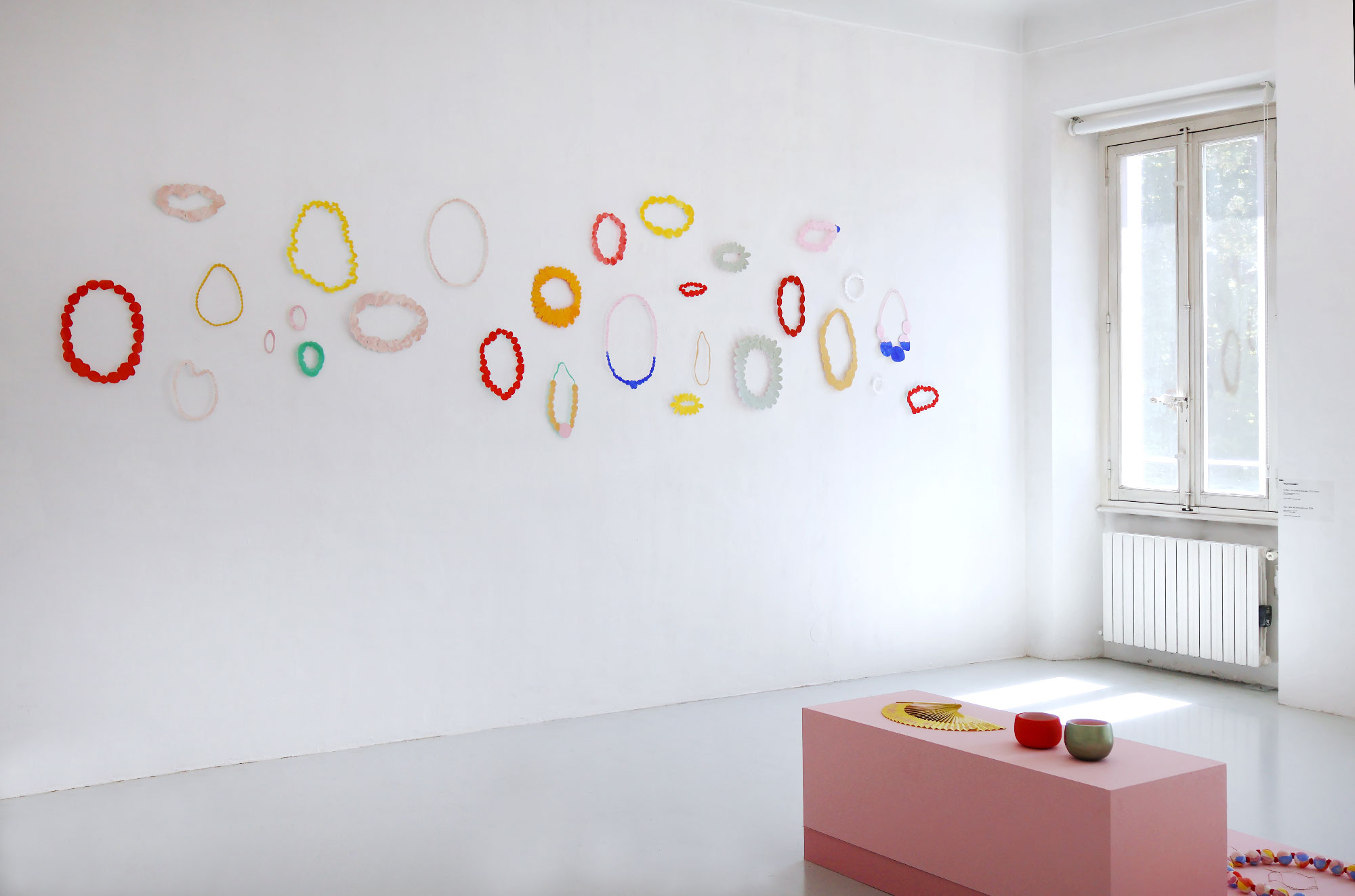
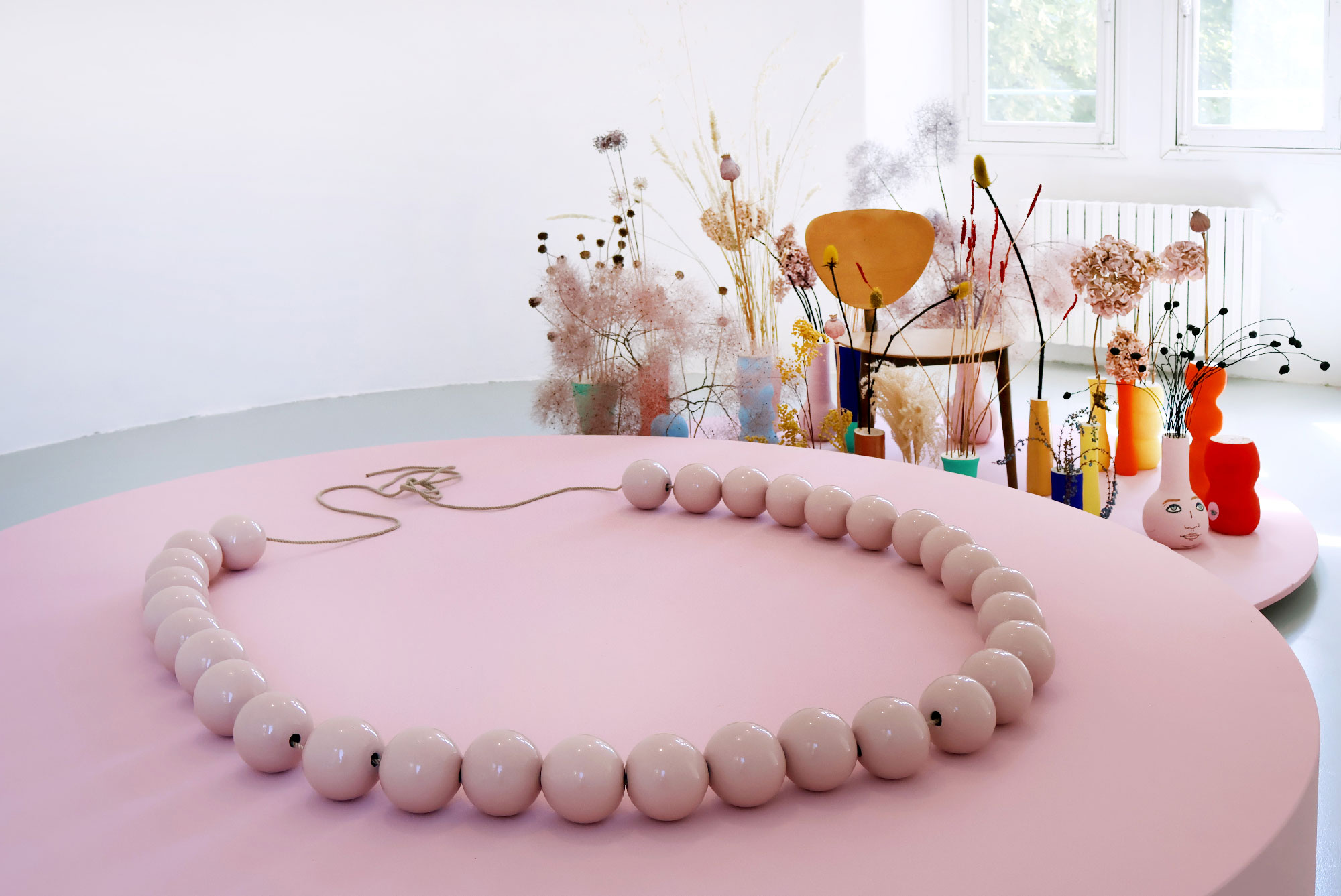
Costume has long played an essential role in her work. Dresses, aprons, studio slippers and scarves are never merely accessories. They are conceived as objects that can be activated, worn or staged. The studio garments she presents in Mouans-Sartoux are almost talismanic. ‘The ones I invent for myself to wear in the studio have powers, magical possibilities,’ she says.
This sense of magic runs throughout her work. Her earliest characters already seemed to belong to another world. ‘Many of them can appear ghostlike, or as though they have come from somewhere else. They are beings in states of transition, sometimes asleep, sometimes dead, or wavering between the two. This preoccupied me a great deal during the 2000s.’ With Odette Spirit (2014), a shift occurred. ‘It marked the beginning of a new, less sombre dimension, and also the moment when the sea began to appear literally in my work, as both a setting and an agent of transformation.’
Throughout the films and stories she creates, the sea becomes a realm of passage. ‘It is not a place where one simply disappears. One slips into the water. For me, it is the site of disappearance, but also somewhere one can be transformed and return from.’ Barré was already playing with the relationship between forms and words: in Odette Spirit, the letter ‘O’, the initial of her heroine’s name, becomes a recurring motif that heralds the circle—a figure that would become one of the defining motifs of her work. Necklaces, crowns, lifebuoys, spheres and lanterns all explore the same rounded form, which the artist describes as ‘quite perfect and reassuring’. By varying its scale, colours and materials, she sees it as a way of ‘lifting us slightly out of reality’. Omnipresent throughout her work, this simple form draws equally on everyday objects and seaside imagery.
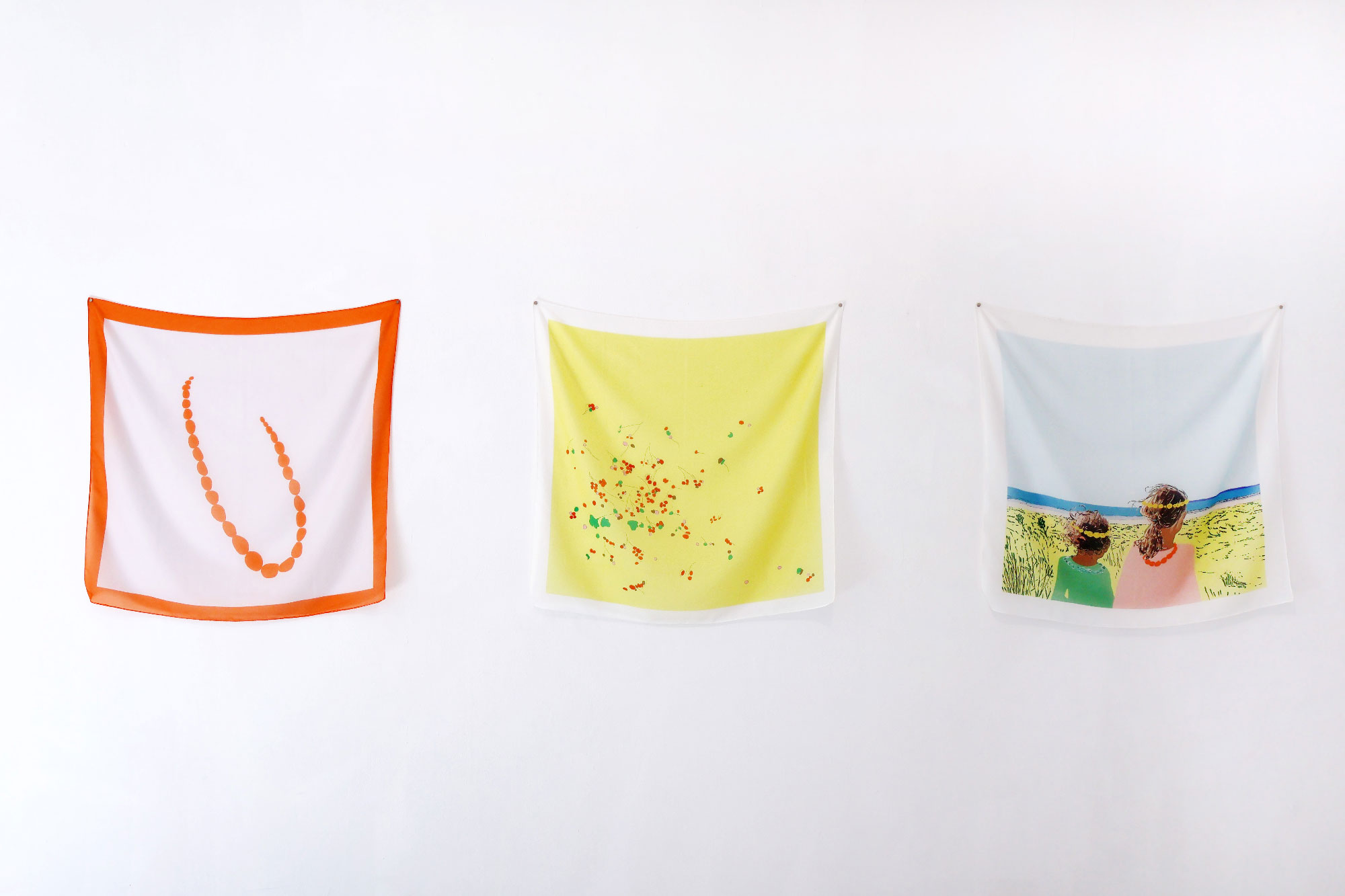
The scarves presented in the exhibition follow this same logic. At once drawings, objects and garments, they embody this desire to create “activatable” works, capable of moving from one use to another. “They can be hung like drawings, but they can also be worn on the body. I am interested in this dual status.” Initially conceived as prototypes for the musical she has been working on for several years, they have gradually become “a kind of family” of autonomous works.
This future musical will unfold between two beaches. “It is a story that begins on a beach and ends on that same beach, but the protagonists will find themselves on another beach, one that is far stranger and more surreal. A kind of parallel world where everything seems to function more or less like our present world, but not quite. Crossing the sea will alter their fate.”
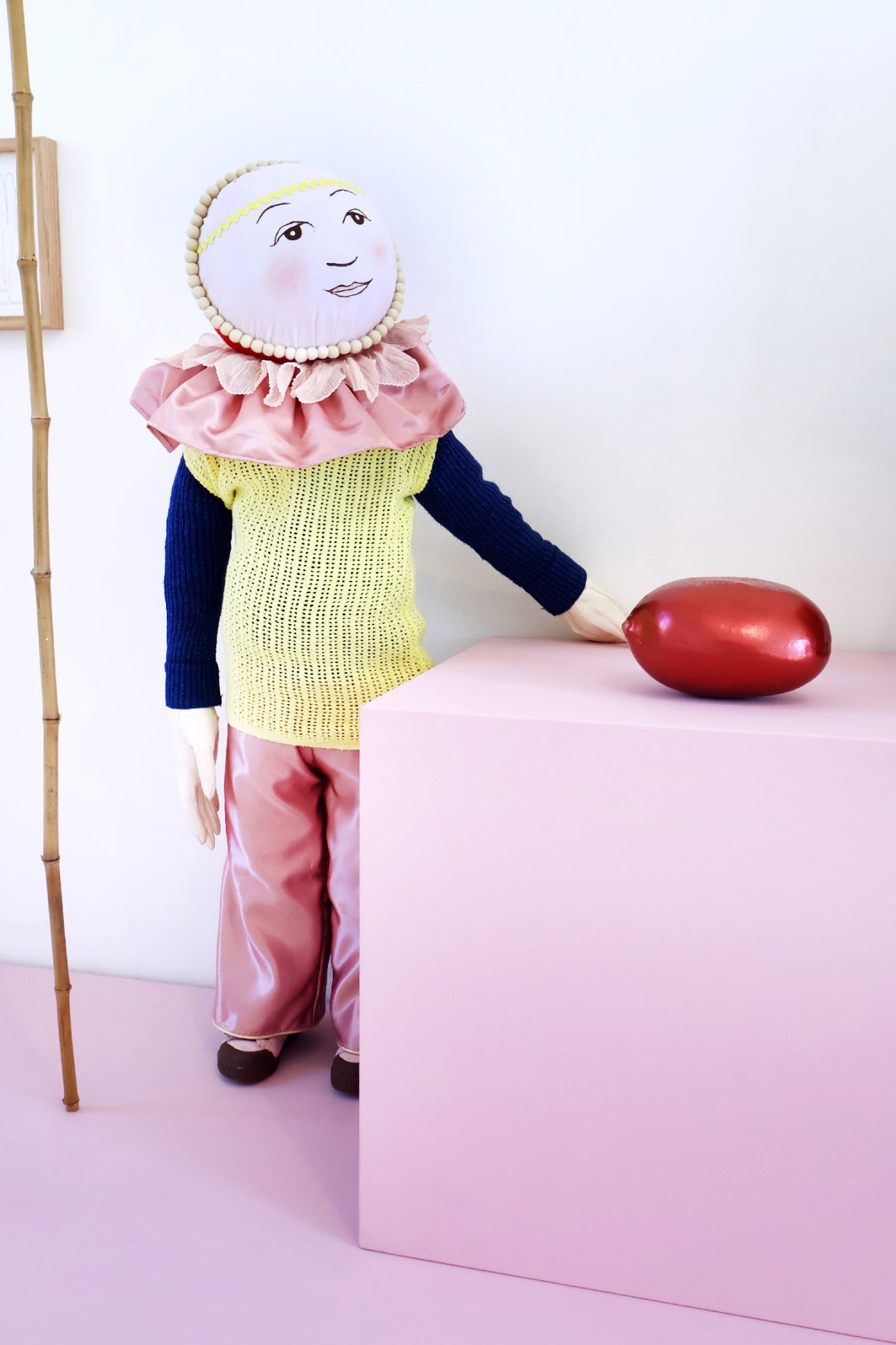
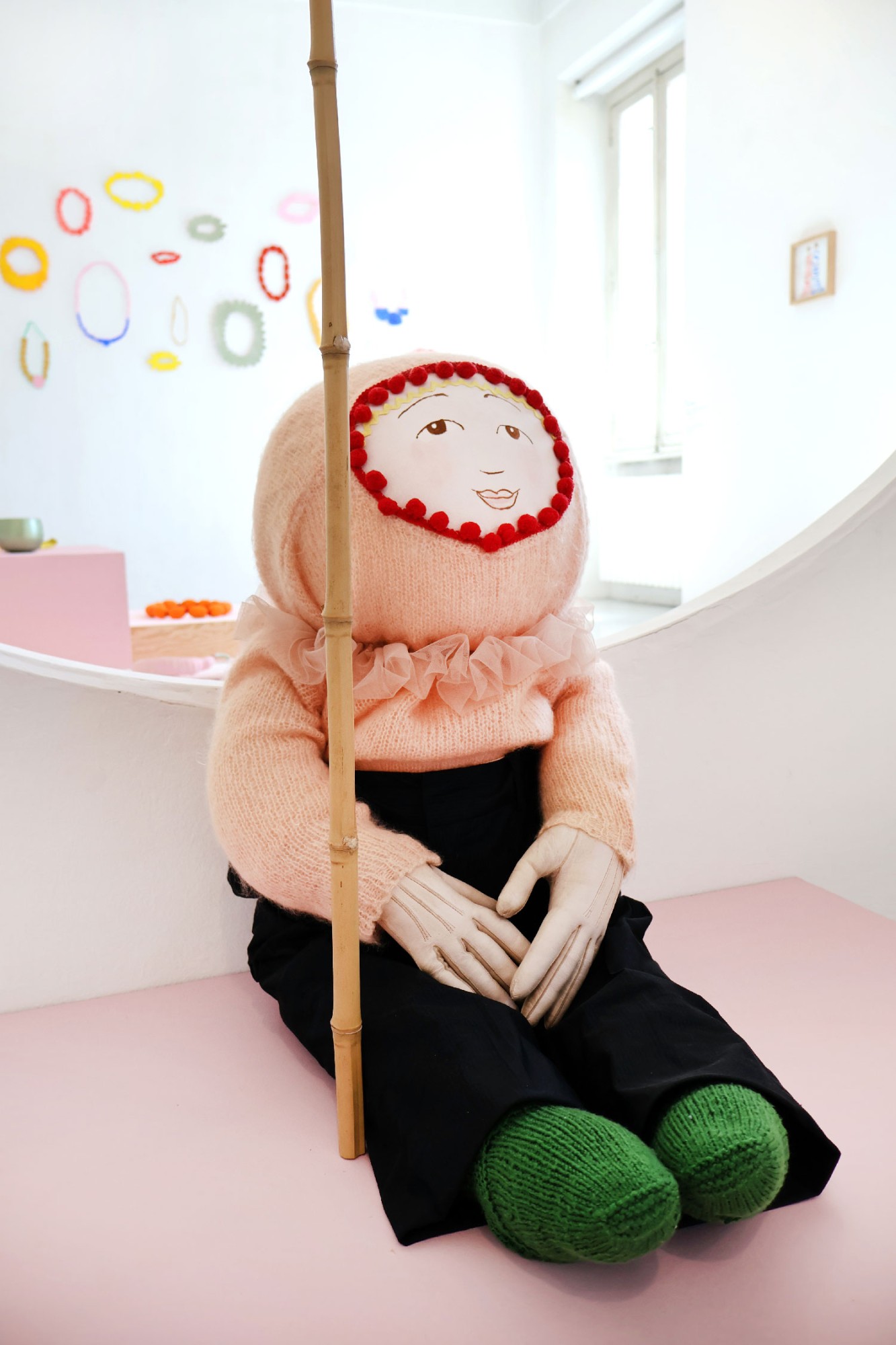
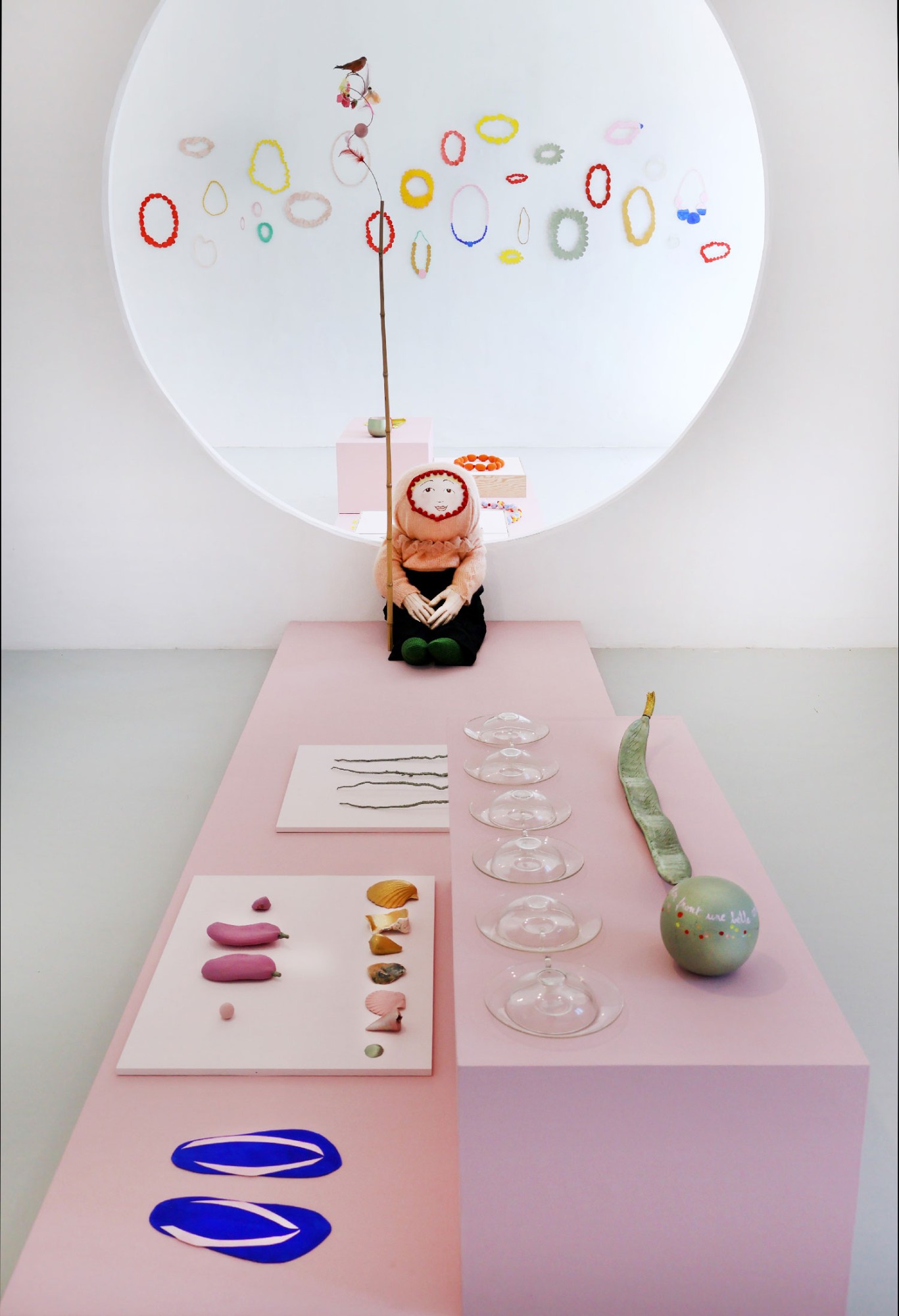
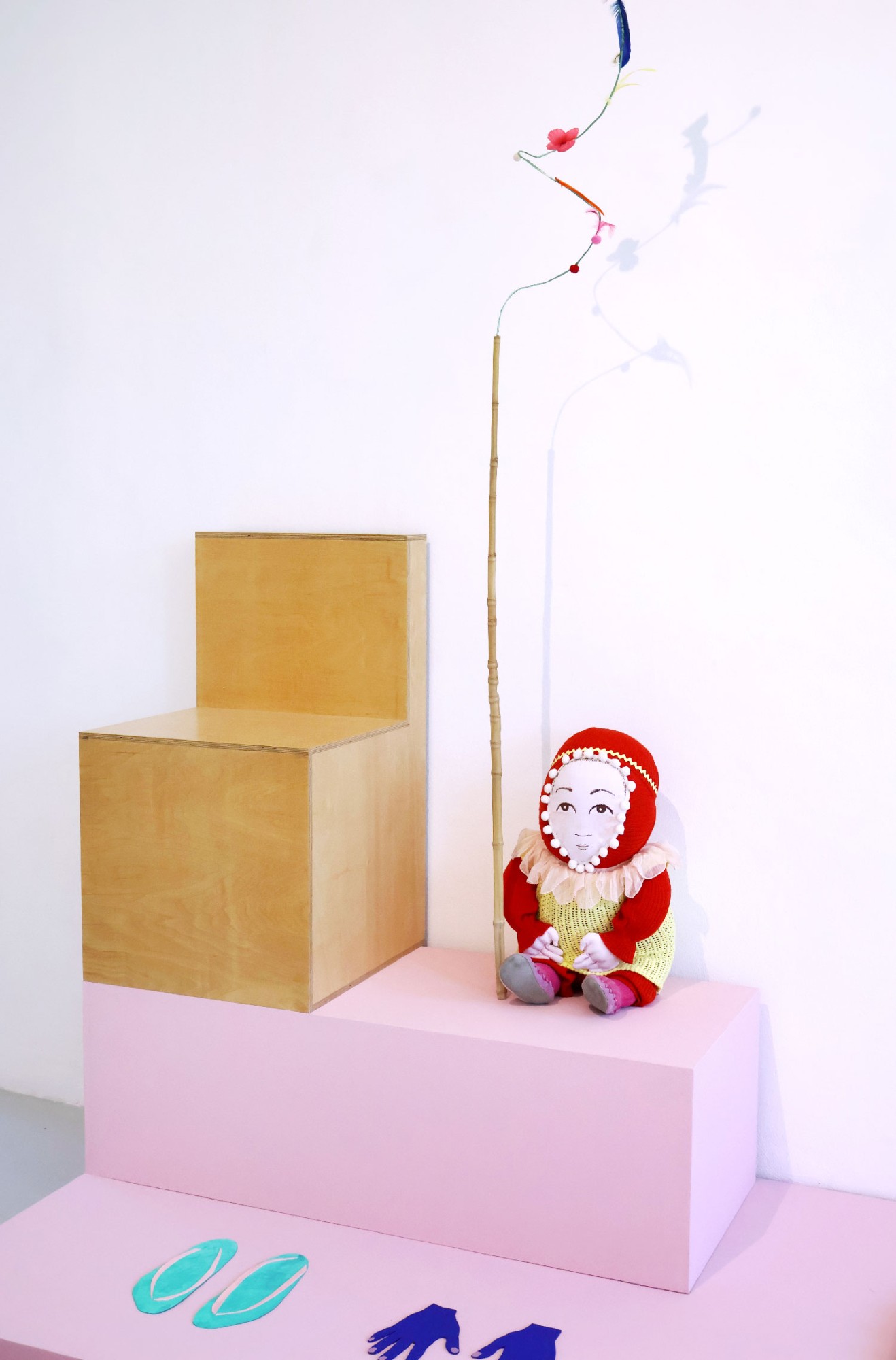
The mannequins that have appeared in her recent exhibitions continue this exploration. More pliable than the resin-cast figures of her early work, they recall a childhood memory: a large rag doll she made with her mother, as tall as she was. They also reflect the influence of the many women artists working with textiles today. This newfound suppleness accompanies a deeper shift in her work, now less concerned with the uncanny than with movement, gentleness and metamorphosis.
The scarves presented in the exhibition follow the same logic. At once drawings, objects and garments, they embody her desire to create works that can be ‘activated’, moving from one use to another. ‘They can be hung like a drawing, but they can also be worn on the body. I am interested in this dual status.’ Initially conceived as prototypes for the musical she has been developing for several years, they have gradually become ‘a kind of family’ of autonomous works.
This future musical will unfold between two beaches. ‘It is a story that begins on a beach and ends on that same beach, but the protagonists find themselves on another beach, one that is far stranger and more surreal. A kind of otherworld where everything seems to function more or less as it does in our world today, but not quite. Crossing the sea will alter their fate.’
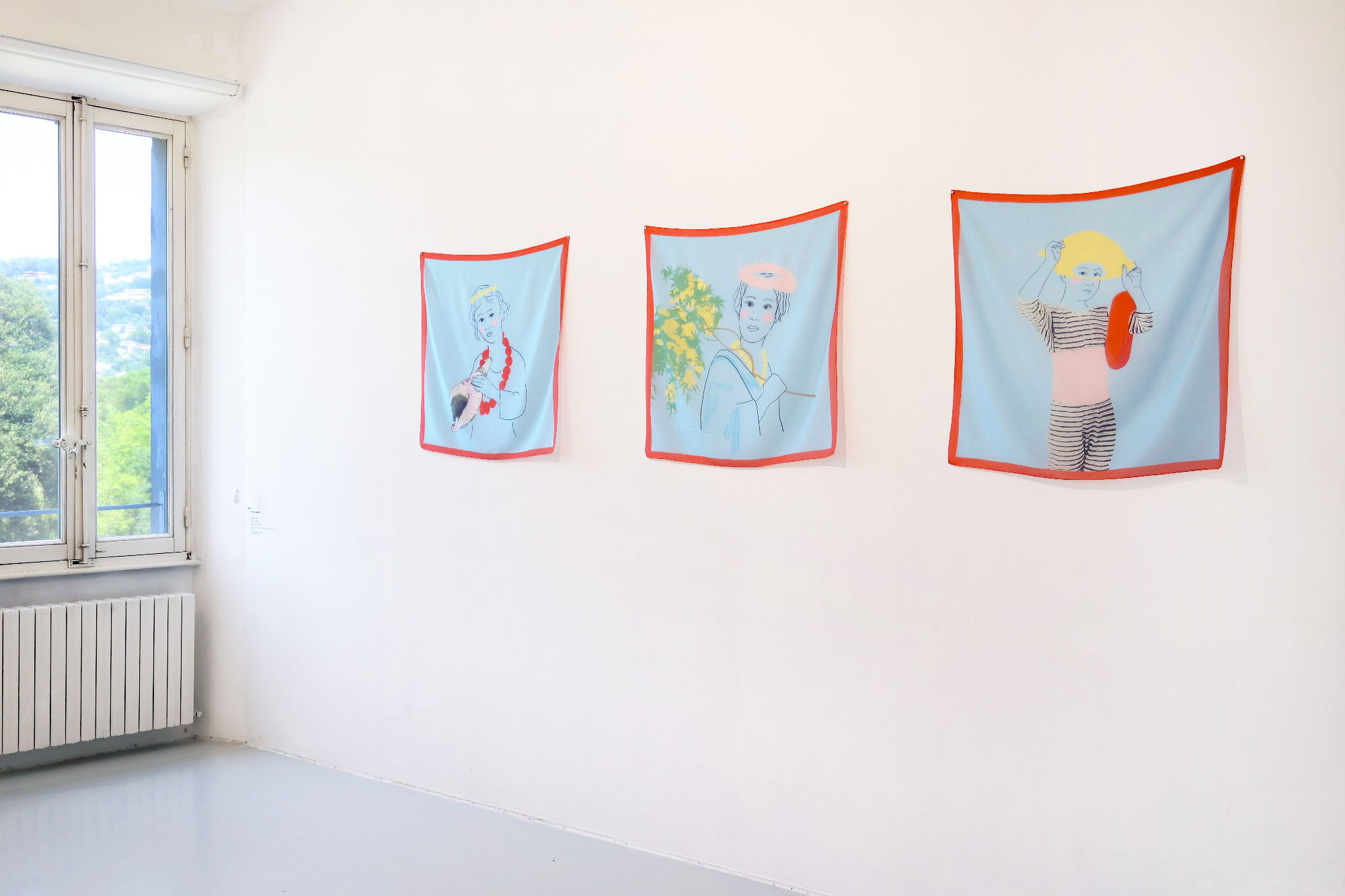
After exhibiting at numerous institutions across France, she chose to return to her native Finistère and settle in Douarnenez. Over the past decade, the sea has gradually established itself as the defining landscape of her imagination. ‘I feel very fortunate to live with the sea before my eyes. It naturally finds its way into the stories I invent.’ It is not merely a backdrop, but a creative material in its own right. Lifebuoys, beachwear, shoes, parasols, towels, paddleboards, kayaks and wetsuits all become objects to be reinvented. ‘I find it exhilarating to take hold of this entire vocabulary and make it my own.’ She now wants to bring together ‘the different beach tribes’—surfers, paddleboarders, metal detectorists and holidaymakers—by reinventing their costumes and rituals.
This fascination with the beach gradually converges with another dimension of her work: childhood. The characters in her musical ‘are not very mature’, she admits with a smile. ‘I like the idea of being eight, thirteen, eighteen or fifty years old, all in the same day.’ Rather than a form of regression, this return to childhood represents a state of openness to the world. ‘There is a pleasure in letting yourself be carried along, in allowing yourself to be eight years old. You can believe in magic, believe in anything, play at dying and coming back to life.’
The unsettling figures of her early work have not disappeared. They have simply taken on a different guise. Over time, Virginie Barré has moved from an imaginary world shaped by disappearance to one centred on transformation. Her sculptures, films, costumes and objects continue to explore the thresholds between reality and fiction, but now do so with an unapologetic gentleness, as magic, play and poetry take precedence over unease.
Above all, Absolue de rose offered Virginie Barré an opportunity to enter into dialogue with several women artists represented in the Espace de l’Art Concret collection, including Sonia Delaunay, Marcelle Cahn and Meret Oppenheim. She was as interested in their work as in the paths they followed. ‘The question of everyday life—of how art and life are intertwined—is something that particularly interests me.’ The watercolours inspired by Sonia Delaunay’s costumes and the new characters inhabiting the exhibition thus extend this silent conversation across generations.
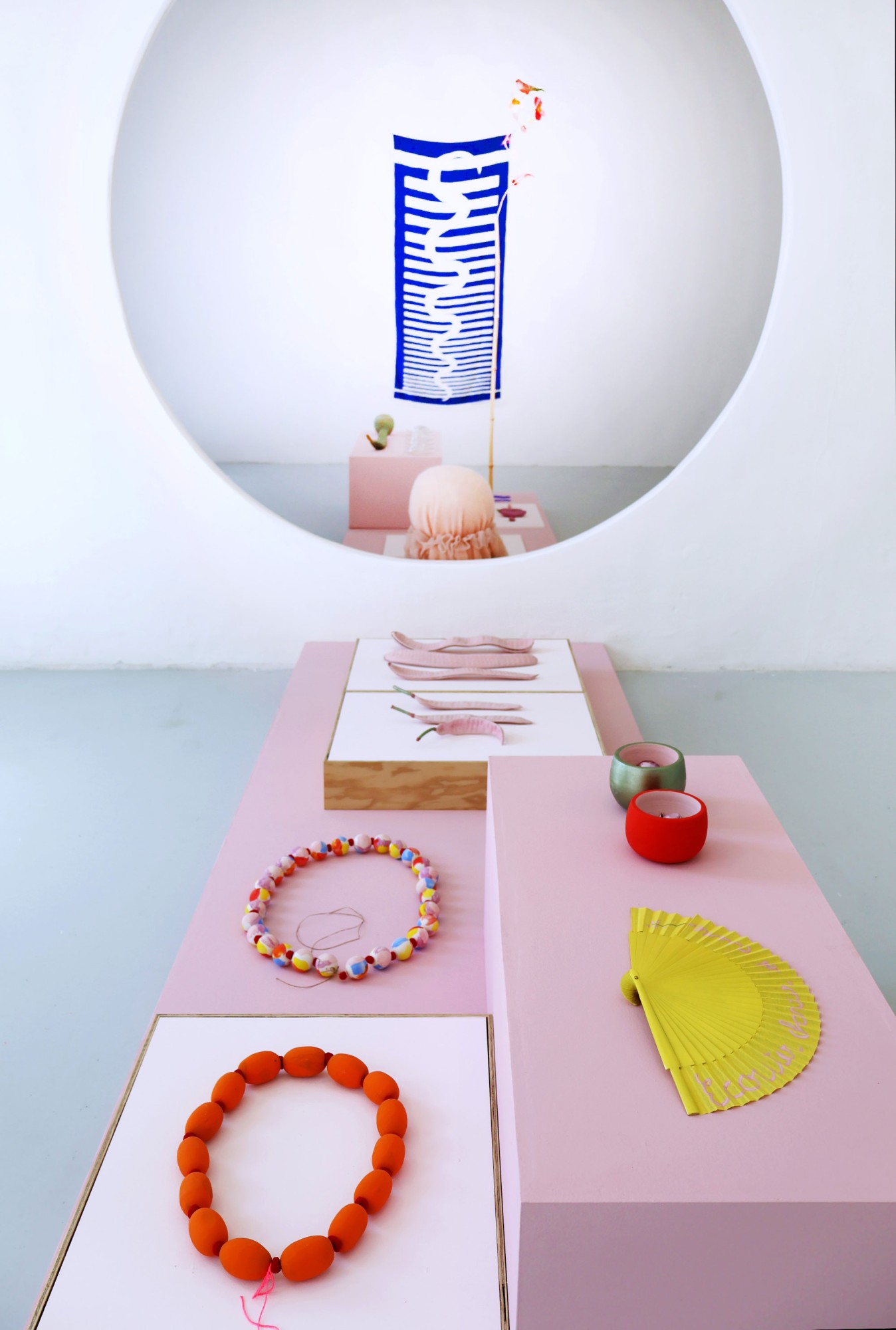
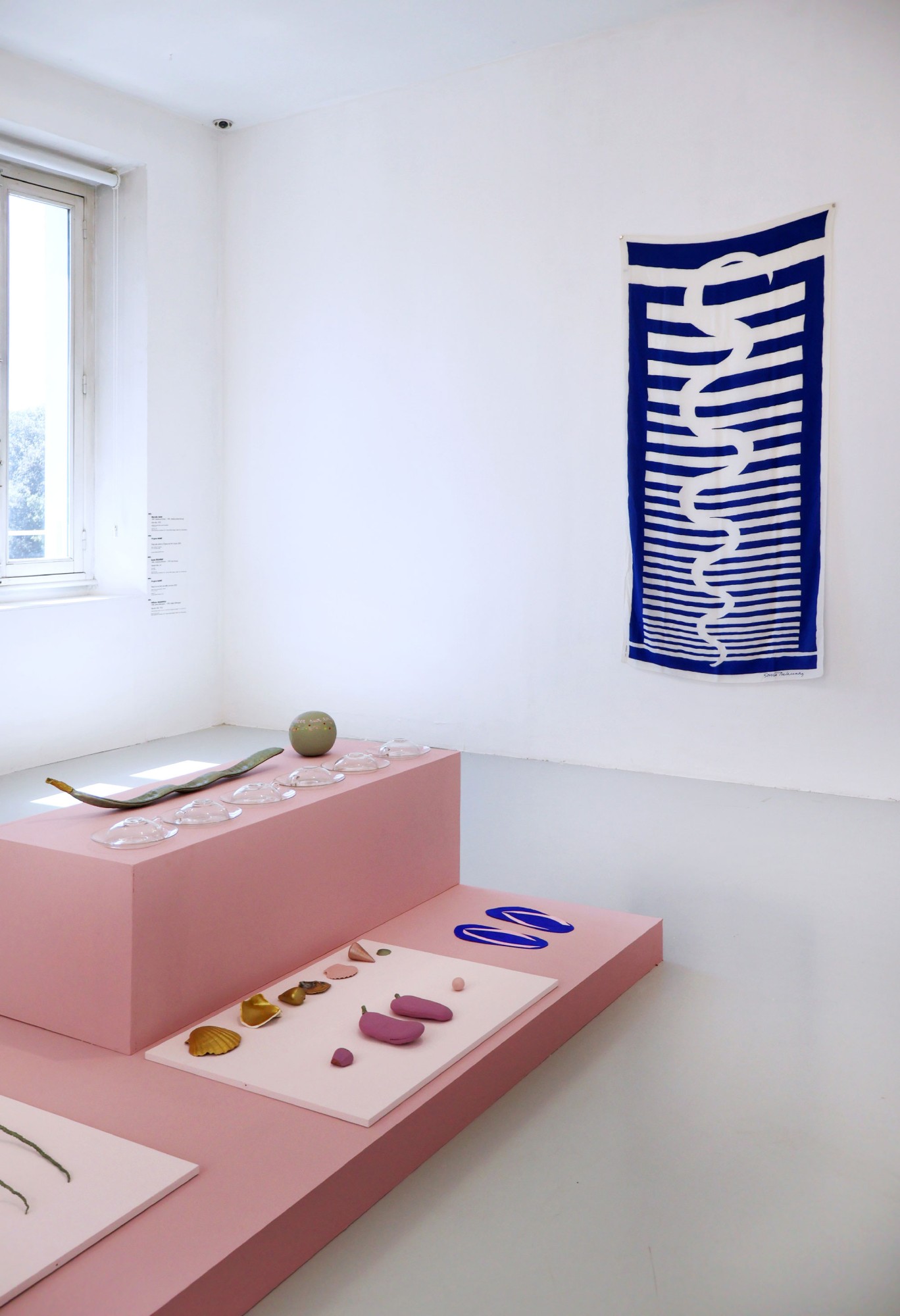
→ Absolue de rose, Virginie Barré, until 12 November 2026 at the Espace de l’Art Concret, Mouans-Sartoux
→ Discover our art road trip along the French Riviera and through the Nice hinterland